


Essential chords matter to beginners because they turn separate notes into playable songs. They also matter to music schools and retailers because early progress is affected by more than chord diagrams. Instrument setup, size, tuning stability, clear teaching steps and timely support all influence whether a learner continues.
For learners, the immediate task is simple: form a few open chords cleanly and change between them in time. For schools, distributors and retailers, the larger task is to provide instruments, setup standards and support materials that let those learners make fair, repeatable progress. That connection turns chord learning into useful evidence for program design and range planning.
The goal is not to promise that one guitar or one chord chart will create fast results. It is to build a repeatable learning and support system in which players can practise, teachers can identify problems and business buyers can improve the next purchasing decision.

A correctly prepared guitar helps beginners concentrate on fingering, rhythm and chord changes.
Quick Answer
Beginners usually make better progress by learning two or three open chords, checking every string, then practising slow changes in a short musical pattern. Retailers and music schools should pair that learning sequence with tuned, correctly set-up instruments and a simple feedback record. If the same difficulty appears across several players or units, review instrument fit, setup and batch consistency before assuming that the learner is the problem.
Why Chord Readiness Matters to Retailers and Music Schools
A beginner who struggles may be facing a learning issue, an instrument issue or both. A school or retailer needs a simple way to separate them. When the guitar holds tuning, has an appropriate setup and fits the player, the teacher can evaluate technique more fairly. When several instruments show the same problem, the evidence should return to the receiving and supply process.
| Evidence or metric | Value question | Joint decision |
|---|---|---|
| Clean first chord | Can the learner fret a simple shape without excessive effort? | Check teaching step, string action and instrument fit |
| Stable tuning through practice | Does the guitar stay usable during a normal lesson? | Review strings, tuners, setup and receiving condition |
| Chord-change progress | Can the player move between two shapes in time? | Adjust the practice sequence and support material |
| Repeated problem across units | Is the same difficulty appearing on multiple instruments? | Document the pattern and open a supplier review |
| Continuation and renewal | Do learners return for the next lesson or course stage? | Plan program depth, replacements and step-up roles |
A Practical Beginner Chord Path
Start with open chords that use a small number of familiar shapes. C, G, D, A, E, Am, Em and Dm are common reference points. A teacher does not need to introduce every chord in the first lesson. Two shapes that can be played cleanly and changed slowly are more useful than a long list that the learner cannot control.
Form one chord and check every required string separately.
Release unnecessary pressure without moving the fingers far from the strings.
Change to a second chord without a metronome.
Add a slow, steady count after both shapes sound clean.
Use a short two-chord pattern before adding a third shape.
Major and minor chords create different harmonic colour, while seventh chords add another note and often create stronger movement. Those terms are useful, but a beginner should first learn to hear whether the intended strings sound clearly and whether the rhythm remains steady.
How Beginners Should Practise Chord Changes
Use short practice blocks. Spend one minute forming the first shape, one minute forming the second shape and two minutes changing between them. Rest, then repeat with a slow count. Clean repetition is more useful than speed created by squeezing harder.
Watch for muted strings, buzzing caused by finger position and tension in the thumb or wrist. If the same string remains difficult on several chords, check whether the finger is touching an adjacent string. If every learner struggles on the same instrument, inspect the setup before treating the issue as a teaching failure.
For consumer readers, this process creates a visible goal: two clean chords, an even four-count and a small improvement in the number of accurate changes. For retailers and schools, it creates feedback that can be compared across instruments and classes.

Body size and setup should be checked against the individual learner and the program role, not age alone.
Build a 30-Day Beginner Chord Path
A short program is easier to support when every stage has a visible outcome. The following 30-day path is not a promise that all learners will progress at the same speed. It is a planning framework that teachers, stores and distributors can adapt to lesson frequency, age, hand comfort and the music being studied.
Days 1–7: establish a clean reference. Tune the guitar before every session. Introduce two open chords with limited finger movement, and ask the learner to sound each required string separately. Record whether muted notes come from finger position, excessive pressure, reach or an instrument condition. A school using several instruments should identify each unit so repeated observations can be compared.
Days 8–14: connect two shapes in time. Use four slow beats for each chord, then reduce the pause between changes. The target is not speed. It is an even pulse with recognisable chord sound. Retail staff can use the same exercise during a beginner demonstration because it reveals whether tuning, action and neck feel allow a fair trial without turning the conversation into an unsupported tone claim.
Days 15–21: add one musical decision. Introduce a third chord, a simple strumming variation or a song fragment suited to the learner. Keep only one new variable at a time. Teachers can note which change causes difficulty; retailers can use anonymised recurring questions to improve product comparisons, setup guidance and accessory recommendations.
Days 22–30: review continuation and next needs. Ask the learner to play a short progression at a comfortable tempo. Check tuning before and after, note any recurring setup issue, and identify the next learning barrier. Some players need more time on the same instrument. Others may need a different size, string feel, teaching format or later step-up role. The evidence should guide the decision rather than a fixed calendar.
For a group program, report the share of instruments released without corrective work, the common learning barrier and the average preparation time. These measures give a buyer and Vines Music a practical basis for discussing SMIGER or LUXARS range roles, documentation and replenishment without reducing the conversation to unit price.
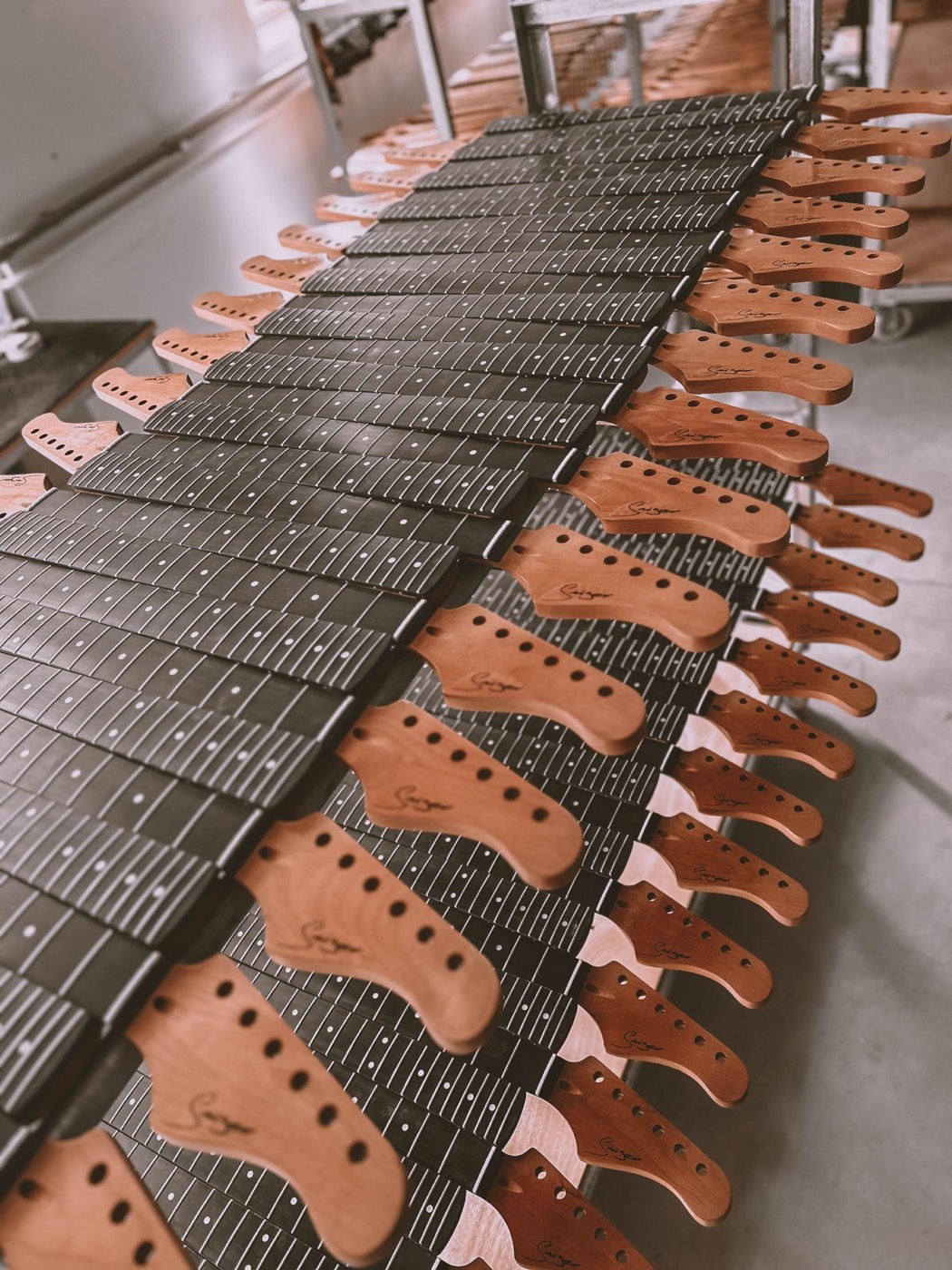
Consistent components and preparation support fairer learning and receiving comparisons.
Instrument Readiness Comes Before Judging the Player
Before a lesson or sale demonstration, tune the guitar and check neck feel, string action, fret condition, hardware and string condition. Do not use a beginner label as a reason to accept an instrument that is difficult to play or inconsistent across a class set.
Schools and retailers can use the guitar receiving and setup guide to create a release-to-class or release-to-display check. Record the exact model and the corrective work required. A repeated setup pattern is supply-chain information, not only a workshop task.
Turn Learning Feedback into Range and Supply Decisions
The strongest beginner program connects player experience with commercial and operational evidence. Track which instrument roles support continued practice, which sizes or formats create repeated questions, how much setup time is required and how quickly replacements can be supplied.
| Evidence or metric | Value question | Joint decision |
|---|---|---|
| Ready-to-learn rate | How many instruments begin use without extra corrective work? | Improve receiving standards and batch consistency |
| Practice continuation | Do players remain active after the first learning stage? | Evaluate the fit of the program and product role |
| Accessory attachment | Which picks, strings, tuners or bags solve a real learning need? | Build useful bundles rather than add-on pressure |
| Replacement response | Can a class or retailer restore availability quickly? | Set spare depth and service expectations |
| Cost per active learner | What is the total cost after setup, service and replacement? | Compare lifecycle value instead of unit price |
| Step-up conversion | Which learners need a different role after the foundation stage? | Plan the next SMIGER or LUXARS option |
The SMIGER range can support accessible acoustic, classical and other category roles when the exact model is matched to the learner and program. A LUXARS electric-guitar role may support a later amplified or performance stage when the course, equipment and support process are ready.
Sharing lesson feedback, setup data and replacement patterns with Vines Music allows the relationship to move beyond a one-time purchase. The buyer contributes real use evidence; the supply partner helps improve information, consistency, response and future range decisions. The objective is stronger learning continuity and portfolio profit, supported by multi-dimensional value rather than price-only competition.
Use Lesson Evidence to Improve the Product Range
Beginner questions become commercially useful only when they are recorded in a consistent form. A comment such as “this guitar is hard” is too broad. A better note identifies the model, unit, tuning, chord, string, visible setup condition and whether the same symptom appears after a teacher or technician repeats the test. That record protects the learner from unfair judgement and helps the business separate instruction, setup and supply issues.
Review the evidence at three levels. At unit level, decide whether one instrument needs routine preparation or technical review. At model level, look for repeated setup time, fit questions, returns or strong continuation. At program level, compare the total support cost with active learners, lesson renewal and step-up demand. This is how a low initial purchase price can be distinguished from genuine lifecycle value.
Retailers should also connect learning questions with product-page accuracy. Size, scale, construction, included items and current model code should agree across the approved record, sales sheet and page. If a fact is unclear, confirm it before publication or recommendation. Do not turn a component statement into a guarantee that every beginner will prefer the instrument.
A useful monthly review includes teachers, sales staff, receiving staff and the buyer. Share the most common learning barrier, corrective setup hours, out-of-stock interruptions and verified service cases. Then agree one action: improve a comparison card, adjust stock depth, clarify a product field, change the receiving check or request a corrective response. Small documented actions create more value than broad claims about quality.
If your team is planning a classroom or beginner retail program, share the learner profile, expected quantity and receiving standard with Vines Music. The discussion can then focus on program continuity, information quality and profitable range roles rather than a price-only shortlist.
Build a Support Loop Around the Learner
The product sale is only the beginning of the beginner experience. Clear tuning instructions, an appropriate bag or stand, replacement-string guidance and a defined contact path can reduce avoidable frustration. Accessories should solve a verified need; they should not be attached simply to increase the basket.
Schools can schedule a quick condition check at the start of each teaching cycle. Retailers can record the first questions raised during demonstrations and returns. Distributors can consolidate those observations before a range review. Vines Music can use the shared evidence to clarify model information, improve comparison materials and discuss supply response across SMIGER and LUXARS roles.
This loop supports both sides of the market. Learners receive clearer guidance and more usable instruments. Business buyers gain better visibility into preparation cost, support demand, replenishment risk and margin contribution. The result is a supply relationship built on information sharing and corrective action rather than one-off transactions.
Set Release and Escalation Rules
A dependable program needs clear hand-off rules. Release an instrument to class or display when identity, tuning, basic playability and required included items have passed the agreed check. Route it for routine preparation when the work is within the retailer or school’s documented process. Hold it for technical review when a symptom is repeatable but its cause is not confirmed, and open a supply discussion when the same observation appears across several units or conflicts with the approved product record.
Use neutral evidence in every case. Record “third string remains muted after two players repeat the C chord on unit 12” rather than “bad guitar.” Photograph visible conditions before adjustment and note what changed afterward. This allows purchasing, teaching and service teams to act on the same facts. It also gives the supply partner a fair opportunity to investigate patterns and respond with clarification, preparation guidance, replacement or corrective action.
Frequently Asked Questions
Which guitar chords should a beginner learn first?
Begin with two or three common open shapes such as Em, Am, C, G or D. The exact order can follow the teacher and the music being studied. Clean sound and steady changes matter more than the number of shapes memorised.
Should a school choose guitar size only by student age?
No. Age can be a starting reference, but reach, posture, hand comfort, body dimensions and teacher observation should be considered. Test the exact instrument when possible.
When is chord difficulty an instrument problem?
Check the instrument when several chords are unusually hard on the same strings, tuning is unstable or multiple units show the same issue. Record the observation and compare it with the receiving setup standard.
Why should retailers track beginner progress?
The information helps distinguish product fit, setup quality, teaching support and accessory needs. It can improve staff guidance, replenishment and the design of beginner and step-up ranges.
How should a retailer compare the cost of beginner guitars?
Compare more than the invoice amount. Include receiving and setup time, verified return or service cases, replacement speed, stock availability and whether the instrument supports continued learning. These factors influence the contribution from each active learner and the reliability of the overall program.
Related Buyer Guides
Support the Next Learning Stage
Retailers, distributors and music schools can contact Vines Music to discuss a SMIGER or LUXARS range for beginner, classroom or step-up use. Include the learner group, instrument role, expected quantity, receiving requirements and replacement plan so the discussion begins with value and operating needs.