


Accessories can be a useful part of a music retailer’s business, but the category becomes difficult to manage when every small item is treated as an isolated product. A practical assortment starts with the jobs customers need to complete: replacing worn parts, maintaining an instrument, making playing more comfortable, preparing for a lesson or performance, and keeping frequently lost items close at hand.
For buyers, the challenge is not simply finding more accessories. It is choosing a controlled range that staff can explain and the stock team can identify. Clear specifications matter because small differences in gauge, material, instrument type or pack quantity can change whether an item is suitable for the customer’s instrument.
The following framework is designed for distributors, importers and music retailers building or reviewing a guitar-accessory category. It focuses on observable product facts and range roles rather than broad claims about performance.
For an initial assortment, separate products into three layers: core items with frequent replacement or everyday use, extensions that support a defined instrument group, and specialist items for less common formats. This makes stock review easier because every SKU has a reason to stay, expand or leave the range.
Organise the category by customer task
A list built only around supplier catalogues can quickly become too wide. Start with the customer task instead. Most guitar-accessory enquiries can be placed in one of several groups:
replacement items, such as strings;
frequently used playing items, such as picks;
support and storage items, including stands, hangers, bags and cases;
adjustment and connection items, such as capos, cables and selected hardware;
specialist items for less common guitar formats.
These groups help the buyer see where depth is justified. Replacement products may need regular stock because customers return for them. A specialist component may need fewer units but more precise product information. The assortment should reflect the pattern of real enquiries rather than giving every group the same number of stock-keeping units.
Define a core, extension and specialist layer
The core layer contains products that answer frequent, easy-to-identify needs. The extension layer provides meaningful alternatives in material, gauge, thickness, pack or instrument type. The specialist layer covers less common formats and should be added when demand is visible.
This three-layer structure prevents two common problems. The first is a wall of similar products that staff cannot compare. The second is an assortment with only one option, which forces staff to treat different customer requirements as if they were identical.
Write the layer beside every proposed item. If the buyer cannot explain why a second item belongs in the range, it may be duplication rather than useful choice.
Use picks to create clear, low-risk comparison points
Picks are small products, but they can teach the team how to structure an accessory range. The SMIGER PK-A23 product record identifies PEI material, a double-sided concentric spiral pattern, overall dimensions of 29 × 31 mm, three shape categories and six listed thicknesses from 0.68 mm to 2.0 mm. The published pack contains ten individually packaged pieces.
Those are concrete comparison fields. A retailer can organise the display by thickness, shape or pack rather than making unsupported promises about a player’s tone. Staff can ask what the customer currently uses and help them compare a visible measurement.
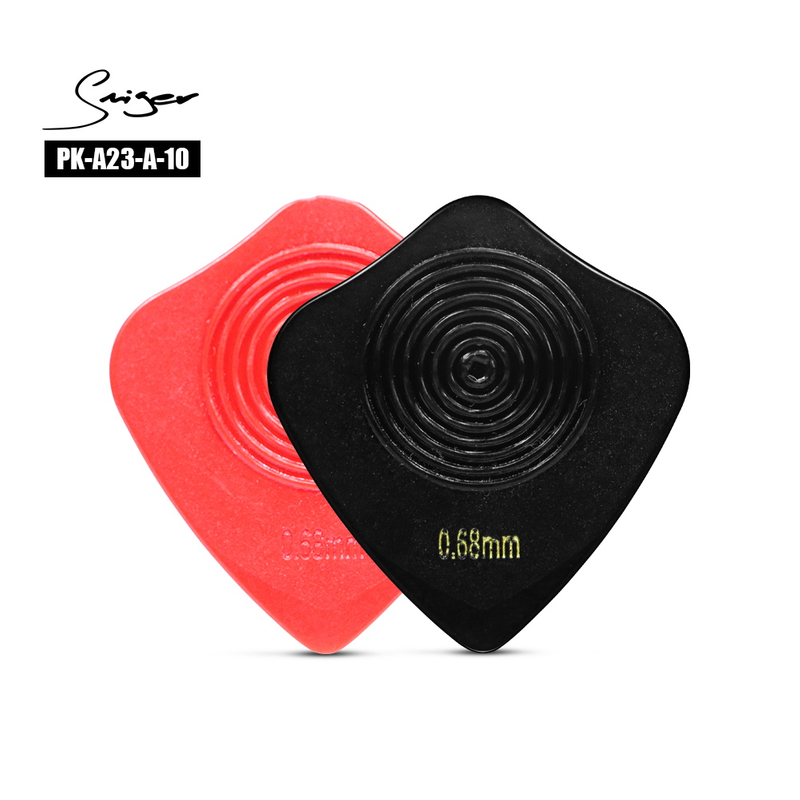
SMIGER PK-A23 PEI guitar picks with several published thickness options.
Mixed-thickness packs can also help a store present the category without carrying deep quantities of every individual variation at the beginning. The buyer should still confirm the exact contents of the pack on the current order and product record. “Mixed” should not be used as a substitute for a clear specification.
Separate string sets by instrument and verified specification
Strings require stricter identification because similar packaging can represent different instruments, materials or gauges. The product name, instrument type, model and gauge information should remain connected throughout ordering, receiving and shelf display.
The SMIGER GA-E30 is listed as a six-piece electric-guitar string set made from steel. The published record identifies the model as GA-E30 and shows the product for electric guitar use. These facts are sufficient to place it in the electric-guitar replacement group. Staff should not rely on the phrase “normal light” alone; the complete gauge information should be confirmed on the current pack or specification sheet before detailed recommendations are made.
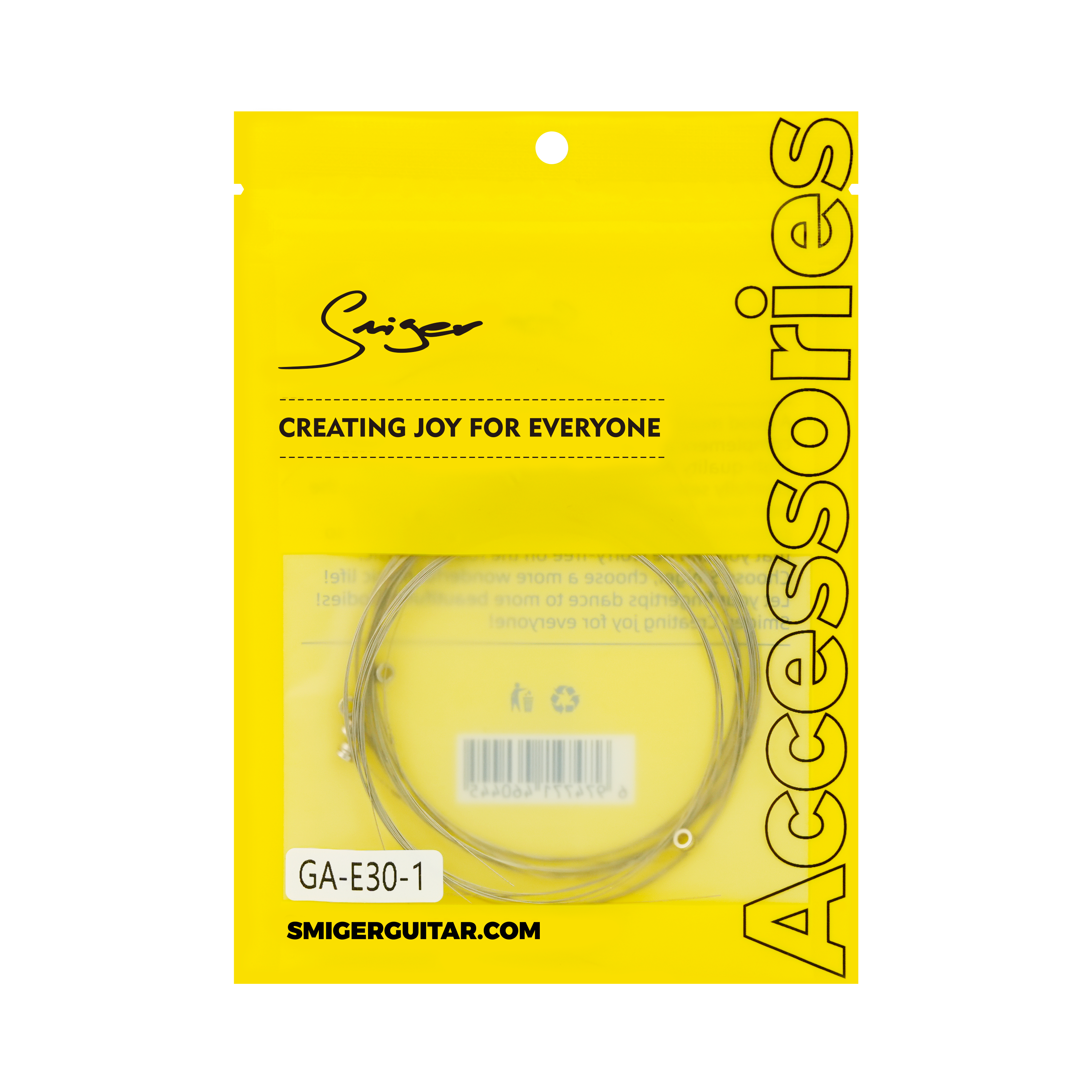
SMIGER GA-E30: a six-piece string set listed for electric-guitar use.
For the stock team, the receiving label should state at least brand, model, instrument type and set quantity. If gauge is a selling field, it must be captured exactly rather than inferred from a marketing phrase.
Give specialist string formats their own position
A 12-string acoustic set should not be treated as a minor variation of a standard six-string set. The SMIGER G12PA is published as a 12-string acoustic-guitar set using phosphor bronze, with a listed .012–.030 gauge range.
This product belongs in a specialist layer because it answers a narrower but clearly defined requirement. A retailer with regular 12-string customers may keep it visible beside acoustic strings. A smaller shop may hold limited depth and use enquiry records to decide reorder levels.
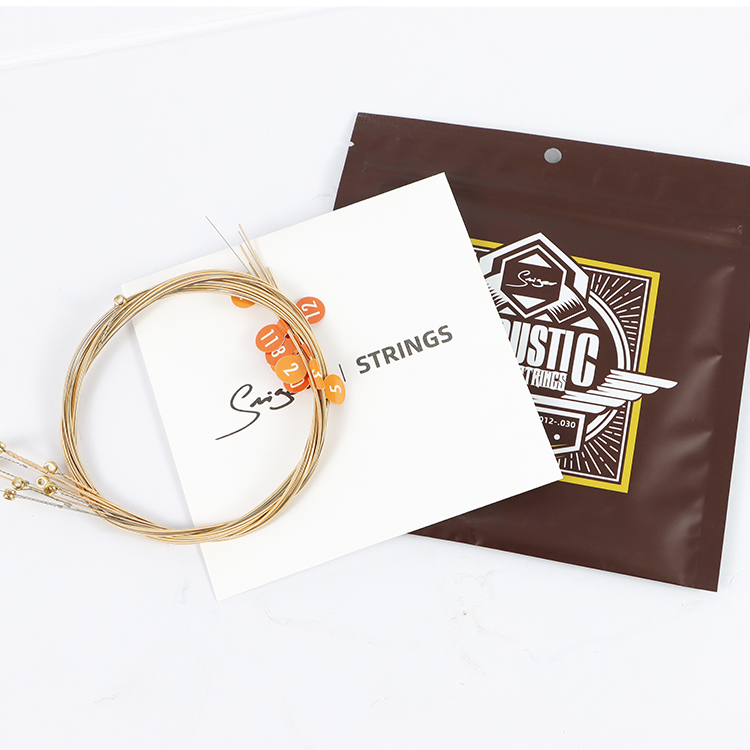
SMIGER G12PA: a phosphor bronze set listed for 12-string acoustic guitar.
The display label should say “12-string acoustic guitar” clearly. That wording reduces the risk of a customer or new staff member selecting the set only because the material or gauge looks familiar.
Build comparison fields that work online and in store
Every accessory family needs a small set of required fields. Too few fields cause confusion; too many unverified fields create unreliable listings. A practical record can use the following structure:
| Accessory family | Required comparison fields |
|---|---|
| Picks | Material, dimensions, shape, thickness and pack quantity |
| Strings | Instrument type, model, material, gauge and number of strings |
| Stands and hangers | Intended instrument, folded or installed dimensions, material and load guidance where verified |
| Bags and cases | Instrument type, compatible dimensions, exterior material and protection features that can be observed |
| Cables | Connector type, length, conductor or shielding facts where verified, and intended signal use |
| Capos | Intended neck/instrument format, material and adjustment method |
Use the same names in the website filter, quotation and receiving sheet. A clean internal record improves both search visibility and staff accuracy because the product page can answer a specific question instead of repeating generic accessory language.
Match display space to the way customers compare
Small products disappear easily when the display has no hierarchy. Core replacement products should be easy to locate. Alternatives should sit close enough for customers to compare the relevant field. Specialist items need a clear label so they are not mistaken for standard products.
For picks, thickness and pack structure can lead the display. For strings, instrument type should come before promotional wording. A customer looking for electric-guitar strings should not need to read every pack to separate them from acoustic, classical, bass or 12-string sets.
Digital category pages need the same logic. Use descriptive product names, useful filters and images that show the actual pack. Avoid using “hot sale,” “best” or “high quality” as the main difference between two items. Those phrases do not help a buyer verify compatibility.
Set opening quantities by replacement cycle and risk
Not every accessory deserves the same opening quantity. Core products with repeat demand may justify more depth. Specialist sets and model-specific hardware should begin conservatively until sales or enquiry records show a pattern.
Review three types of evidence:
unit sales and repeat-purchase frequency;
customer enquiries that could not be filled from current stock;
slow-moving items that duplicate another product without a clear role.
This review should happen at the model level, not only at category level. A strong total for “strings” can hide slow variants and repeated stock-outs of one useful set.
Prepare an incoming check for small products
Accessories are easy to count incorrectly because packs, sets and cartons can use different quantities. The receiving team should confirm the purchase unit before counting. Check model code, instrument type, visible packaging, pack quantity and the specification fields used in the listing.
For the PK-A23 picks, verify that the received pack description matches the ordered thickness and shape mix. For the GA-E30, confirm the electric-guitar application, model and six-piece set. For the G12PA, confirm that it is the 12-string acoustic set and that material and gauge wording match the approved record.
Photograph discrepancies before relabelling or combining stock. Small product errors can spread quickly if one incorrect record is copied into the website, point-of-sale system and reorder sheet.
Train staff to ask one compatibility question first
The opening question should identify the instrument or task. “Which instrument is this for?” is often more useful than immediately discussing price. A second question can narrow the required field: current string gauge, preferred pick thickness, instrument size or connector type.
Staff do not need to memorise every catalogue phrase. They need access to a short comparison record and the discipline to confirm uncertain details. If a customer requests a specific compatibility claim that is not in the verified product information, the team should check before promising that the item will fit.
Frequently Asked Questions
Which accessories should a small guitar retailer stock first?
Start with frequent replacement and playing needs that match the instruments already sold in the store. Add alternatives only when they provide a clear difference in instrument type, material, gauge, thickness, size or pack.
How many pick thicknesses are listed for the PK-A23?
The current product record lists 0.68, 0.88, 1.0, 1.2, 1.5 and 2.0 mm. Confirm the exact mix in the ordered pack before publishing pack contents.
Is the GA-E30 suitable for acoustic guitar?
The published product record identifies GA-E30 for electric-guitar use. It should be placed and described in the electric-guitar string group.
Why keep a 12-string set as a specialist item?
It serves a specific instrument format and should be clearly separated from standard six-string sets. Stock depth should follow the store’s actual 12-string enquiries and sales.
What should be removed from an accessory product title?
Remove unsupported superlatives and service claims that do not help identify the item. Keep brand, model, accessory type, instrument application and the most important verified specification.
Measure Accessories by Attachment and Reorder Value
Review attachment rate, reorder frequency, compatibility errors, stock days and gross profit per unit of display space. A small accessory with clear specifications and repeat demand can contribute more than a broad set of slow-moving variations.
Share recurring compatibility questions and demand patterns with Vines Music before expanding depth. This helps refine product records, reduce selection errors and connect accessory replenishment to the guitar range customers actually buy.

Use Accessories to Increase Portfolio Contribution
Accessories should strengthen the economics and ownership experience of the instrument range. A compatible string, pick, cable, stand or case can help a customer use the product with confidence, while a disciplined assortment improves repeat visits and total contribution for the retailer. The goal is not to add the most SKUs or let unit price become the only selection criterion.
Connect accessory data with the SMIGER and LUXARS instruments already sold. Customer questions, attachment patterns, compatibility errors and reorder intervals reveal which accessory roles deserve depth and which variations create complexity without adding value.
| Metric | What it reveals | Decision supported |
|---|---|---|
| Attachment rate by guitar category | How often an accessory supports the original instrument sale | Build useful bundles and staff prompts |
| Reorder interval | Whether demand is repeatable and predictable | Set replenishment rhythm and safety stock |
| Compatibility error or return rate | Where product records or staff guidance are unclear | Correct specifications and comparison language |
| Stock-out and lost-sale record | Which core item limits customer service or repeat demand | Prioritise supply response |
| Inventory days by SKU | Which variations rotate and which duplicate another role | Reduce slow depth and release working capital |
| Unit profit per display space | Contribution after handling, returns and occupied space | Protect profitable essentials instead of chasing low cost |
Use the SMIGER and LUXARS range guide to connect accessory roles with the instruments customers actually compare, then review the current Guitar Accessories category. The 30 percent consumer-facing value is practical compatibility and easier ownership; the business value is higher attachment, faster replenishment and fewer selection errors.
Share recurring demand and compatibility evidence with Vines Music. A supply partner that helps improve product records, receiving accuracy and response speed supports higher portfolio profit and long-term trust, rather than operating only as a cost centre.
Related Buyer Guides
Make every accessory earn its place
A useful accessory range is not the one with the most items. It is the one where each product answers a clear need, staff can find the relevant specification and the buyer can review performance without guessing. Organise the category by customer task, separate core and specialist roles, keep product records consistent and use actual demand to control depth.
Review the current Guitar Accessories category and use the packaging and incoming-condition guide when planning receiving checks for small products. To discuss the assortment, contact Vines Music, email info@vinesmusic.com, or send a WhatsApp message to +86 13826092986.