


Packaging should be treated as part of the product specification, not as a detail that is discussed only after an order is ready to move. For a distributor or music retailer, the relevant question is not whether a carton looks strong. The question is whether the instrument is held securely, whether vulnerable areas are protected, whether the carton can be identified throughout the receiving process, and whether the buyer can record what happened if the goods arrive with a problem.
A useful review therefore begins before shipment and continues through receiving, sampling and reporting. It separates three issues that are often mixed together: the condition of the outer carton, the condition of the protective materials inside it, and the condition and setup of the instrument itself. Keeping those issues separate makes communication clearer and helps a purchasing team decide whether a problem is isolated, related to handling, or repeated across a shipment.
This guide provides a practical framework for musical-instrument buyers. It does not promise that every shipping risk can be eliminated. Instead, it shows how a buyer can define checks, request useful evidence and build a repeatable incoming-inspection record.
For a purchasing team, the core method is simple: approve a model-specific packing reference, keep the carton, inner support and instrument condition as three separate inspection layers, and record every sampled unit against its carton and model number. That structure gives logistics, purchasing and sales teams evidence they can use without assuming the cause of a problem too early.
Start with the instrument, not the carton
Different instruments place stress on packaging in different ways. A full-size acoustic guitar has a relatively large hollow body, a long neck and a headstock that should not be forced against the carton. An electric guitar is more compact but can still have exposed controls, a selector switch, a tremolo arm, strap buttons and a finished surface that should not rub against loose accessories.
The packaging review should therefore begin with the model specification. Record the instrument type, overall format, body shape, headstock shape, protruding hardware, included accessories and whether the instrument travels in an individual box, a soft bag or another inner package. A generic carton description is not enough when several models have different body depths or headstock angles.
For example, the SMIGER GN-81D is listed as a 41-inch acoustic guitar with a solid spruce top and sapele back and sides. The SMIGER L-G2-i3 is an electric guitar with onboard controls and additional functions. These two models need different inspection attention even if both are shipped as guitars. The acoustic model calls for careful checks around the body edge, neck joint and headstock. The electric model also requires a check of controls, sockets and any included accessories.
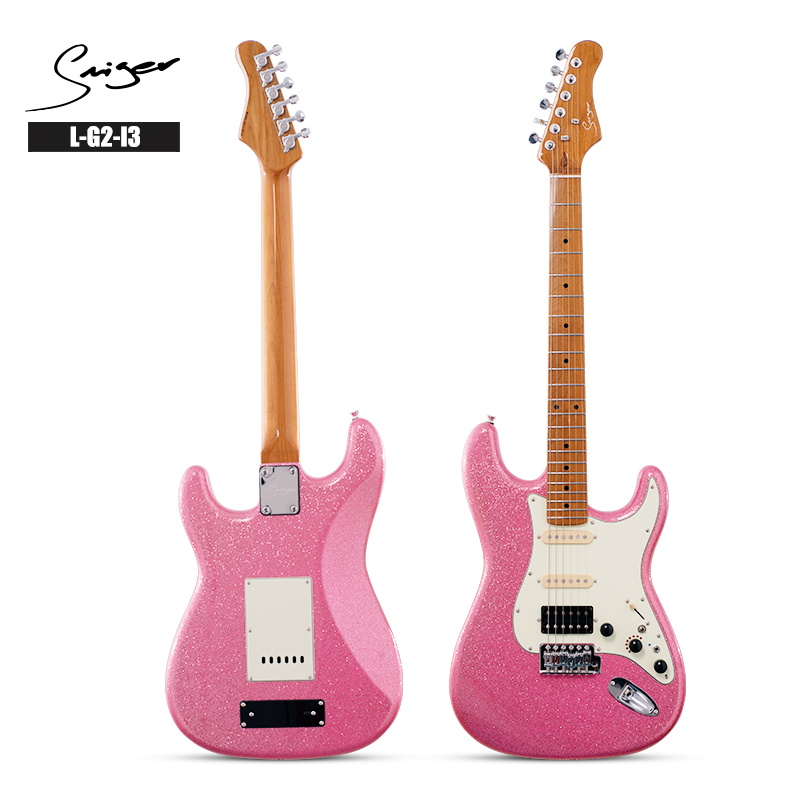
Front and back views help the receiving team identify hardware, control and finish areas that should be checked after unpacking.
Define what the inner support must do
Protective material works only when it holds the instrument in the intended position. Buyers should ask how the body, neck and headstock are supported and whether the instrument can move inside the box. The aim is not to request the greatest possible amount of foam. It is to understand where contact occurs and whether pressure is distributed safely.
A packaging review can cover the following points:
The body should sit in a defined position rather than slide from side to side.
The neck should be supported without becoming a lever point.
The headstock should have clearance from the end and sides of the carton.
Control knobs, switches, bridges and output sockets should not carry pressure from the packing material.
Accessories should be contained so that they cannot move across the finish.
Any bag, film or surface wrap should be clean and should not leave marks on the instrument.
When reviewing a packaging sample, photograph the instrument before the box is closed and again after the internal support has been fitted. Those photographs provide a clearer reference than a short description such as “standard export packing.” They also allow the buyer’s warehouse team to understand how the package was intended to be assembled.
Review the carton as an identification and handling unit
The outer carton has two jobs. It contributes to physical protection, and it carries information needed by the receiving team. Buyers should check the carton dimensions against the packed instrument and confirm that the board, seams and closures are consistent across the sample.
Carton markings should be agreed according to the buyer’s actual receiving process. Useful information may include the model, colour, quantity, carton number and gross or net weight where required. If several finishes share a similar box, the colour code should be readable without opening every carton. If a shipment contains several models, the model reference should match the packing list and the product label inside.
Handling symbols can support communication, but symbols do not replace correct internal support. A fragile label cannot prevent movement inside an oversized carton. Likewise, a strong carton cannot protect an instrument that is resting against an exposed accessory. Review the complete package as one system.
Agree on pre-shipment evidence that can be checked
Useful evidence is specific and connected to the order. A buyer can request photographs of the packed model, carton markings and a small set of randomly selected cartons. The order reference, model and colour should be visible where practical. A short video can show how the instrument is removed from the package and where each protective part sits.
This evidence should not be treated as proof that every unit is identical. Its purpose is to confirm the agreed method before the shipment leaves and to give the receiving team a comparison point. If the packaging arrangement changes after the sample stage, record the revision so that the buyer knows which version applies to the shipment.
Avoid relying on broad, absolute protection claims. International transport includes handling stages that no product page can control. A better discussion records the packaging method, the inspection sample and the reporting process if the delivered condition differs from the approved reference.
Build a receiving check before the goods arrive
| Inspection layer | Record at receiving | Decision supported |
|---|---|---|
| Outer carton | Carton number, label, crushing, puncture, water marks and opened seams | Whether transport or handling evidence needs to be preserved |
| Inner protection | Instrument position, neck and headstock support, loose accessories and displaced materials | Whether the packed arrangement matches the approved reference |
| Instrument | Model, finish, visible damage, hardware, controls and basic playing condition | Whether the unit can proceed, needs setup or requires commercial review |
This three-layer record keeps a damaged carton from being treated automatically as a damaged guitar, and it prevents a clean carton from ending the inspection before the instrument is checked.
Incoming inspection is easier when the warehouse already knows what to record. Prepare a simple receiving sheet with the order number, arrival date, carrier reference, total cartons, selected sample cartons and the name of the person completing the check.
Begin with the shipment-level condition. Photograph the pallet or group of cartons before removing wrapping when this is possible. Record visible crushing, punctures, water marks, opened seams or missing labels. Do not discard damaged cartons or internal materials until the case has been documented and the responsible parties have confirmed what evidence is required.
Next, select cartons according to the buyer’s own sampling plan. The sample should cover more than the easiest cartons to reach. Include different model or colour references and, where appropriate, cartons from different parts of the shipment. If the first sample shows a repeated issue, expand the inspection rather than assuming the problem is limited to one unit.
Separate carton condition from product condition
A damaged carton does not automatically mean the instrument is damaged, and a clean carton does not automatically mean the instrument is correctly set up. Record each layer separately.
For the outer package, note dents, tears, compression, moisture signs, closure condition and label accuracy. For the inner package, check whether supports remain in position, whether accessories are contained and whether there are signs of movement or rubbing. For the instrument, check finish, hardware, neck, frets, strings and basic function according to the model.
This separation makes follow-up more useful. “Guitar damaged” is too vague. “Carton corner compressed; internal neck support displaced; finish mark near the lower bout” gives the supplier, carrier and buyer a much clearer record.
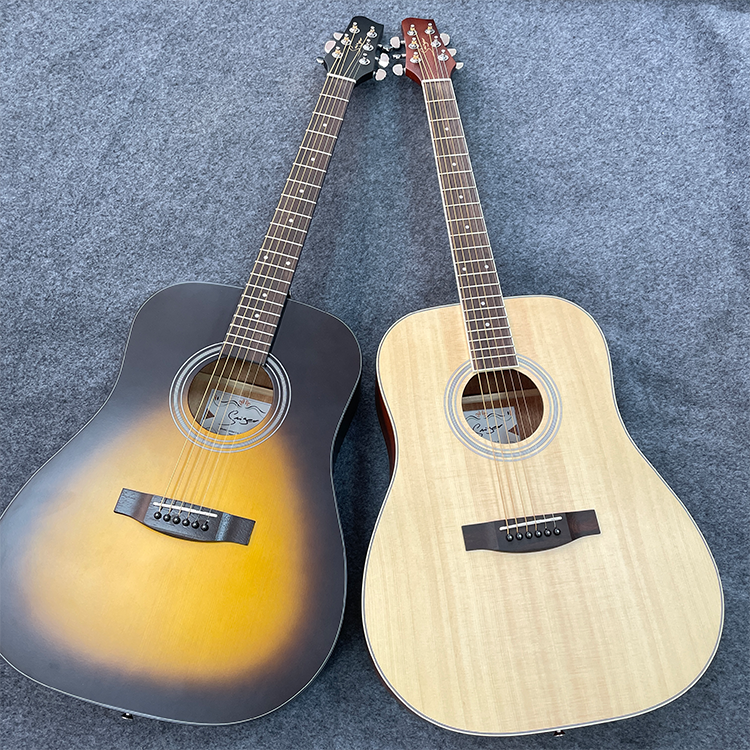
A full-product view helps a receiving team use consistent names for the body, neck and headstock areas in its inspection report.
Check the instrument in a consistent order
A repeatable sequence reduces missed items. After the instrument has adjusted to the receiving environment as required by the buyer’s own handling policy, inspect it under suitable light.
Start with identification: model, colour, serial or batch reference and included items. Continue with the finish and body edges, then the neck joint, neck line, fret ends, nut, tuners and bridge. On an acoustic guitar, check the body, top, back, sides and internal area visible through the soundhole. On an electric guitar, add the output jack, switches, control knobs, pickup area and bridge hardware.
Basic functional checks should match the instrument and the buyer’s sales process. An acoustic guitar can be checked for visible structural condition, tuning operation and obvious buzzing or setup issues. An electric guitar should also be connected to suitable equipment so the receiving team can check output, selector positions and controls. If the model has additional onboard features, prepare a model-specific function list instead of relying on a general electric-guitar checklist.
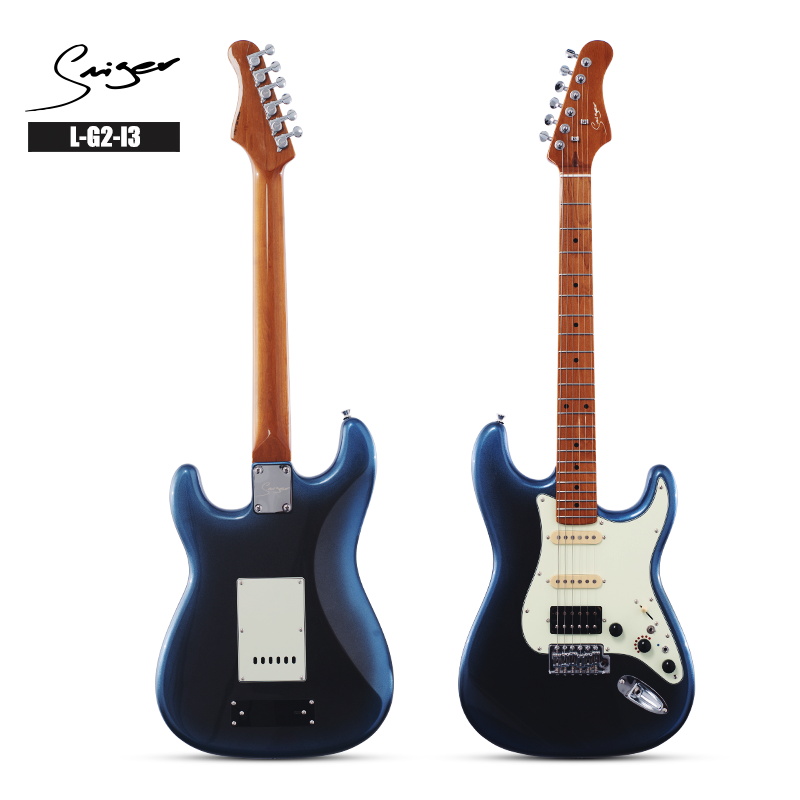
Consistent model photographs can be attached to the inspection sheet so warehouse staff know which hardware and finish areas are present.
Record issues in a form that supports decisions
Each record should connect the issue to a specific carton and instrument. Include the order number, carton number, model, colour, quantity affected and photographs from wide, medium and close views. A close photograph shows the issue; a wider photograph shows where it is located.
Use neutral descriptions. Write what can be observed rather than assuming a cause. “Selector knob detached and found loose inside the bag” is more useful than “poor packing caused the knob to break.” The cause can be reviewed after the evidence is compared with the approved packaging reference.
The buyer should also define possible dispositions: acceptable as received, requires setup, requires a replacement part, cosmetic issue for commercial review, or not suitable for sale. Clear categories help purchasing, warehouse and sales teams discuss the same facts.
Use inspection results to improve the next order
Incoming inspection should create a feedback loop. After receiving, summarize the number of cartons checked, the models covered and the types of issues found. Do not rely only on an overall percentage. A small repeated problem on one model may require a packaging or setup adjustment even when the total shipment result looks acceptable.
Compare results over time using the same definitions. If the buyer changes the sampling plan or acceptance criteria, note the change. Share model-specific findings before the next order is packed, and request an updated reference photograph when the packaging method is revised.
This approach is more practical than asking for general guarantees. It gives both sides a shared record of what was approved, what arrived and what should change.
Route receiving evidence to the team that can act
A receiving report creates value only when each finding has an owner and a next decision. Warehouse staff should not have to decide commercial disposition alone, and purchasing should not receive a folder of photographs without model, carton and quantity references. Use a simple routing table so repeated issues become controlled improvements rather than isolated messages.
| Observed signal | Primary owner | Decision supported |
|---|---|---|
| Carton damage or missing identification | Receiving and purchasing | Preserve evidence, check shipment scope and confirm follow-up |
| Displaced inner support or loose accessories | Product and packaging contacts | Compare with the approved pack and revise the reference if needed |
| Finish, hardware or function exception | Technical review and purchasing | Assign disposition and determine whether inspection should expand |
| Repeated setup work before display | Retail operations and supplier contact | Review setup reference, service effort and sale-ready yield |
Summarise the outcome by model and issue type before the next order. That allows Vines Music and the buyer to compare recurring evidence, close corrective actions and improve the route from packing to sale-ready stock. The commercial objective is not simply lower packaging cost; it is lower avoidable handling, faster issue resolution and stronger unit profit contribution.
Questions buyers should settle before confirming an order
Before the order moves forward, a distributor or retailer should be able to answer these questions:
Which packaging arrangement applies to each model and carton quantity?
Where are the body, neck, headstock and exposed controls supported?
How are loose accessories contained?
Which model, colour and carton references will appear on the labels?
What photographs or video will be provided before shipment?
What sampling plan will the buyer use at receiving?
Which product and functional checks apply to each instrument type?
How will differences be recorded and reviewed?
If these points are clear, the packaging discussion becomes part of purchasing control rather than a last-minute request.
Frequently Asked Questions
Is a thicker carton always better for guitars?
Not by itself. Carton construction matters, but the fit and position of the instrument inside the carton are equally important. Buyers should review the outer carton together with body, neck, headstock and accessory support.
How many cartons should a retailer inspect?
The buyer should define a sampling plan based on shipment size, model mix, previous results and internal quality policy. If a repeated issue appears, the inspection should be expanded and documented.
Should carton damage and instrument damage be reported together?
They can be part of one case, but they should be recorded as separate observations. This helps the parties compare the outer package, inner protection and product condition without assuming the cause too early.
What photographs are most useful for an incoming-condition report?
Use an arrival overview, the carton number and label, the inner packaging position, a full view of the instrument and close views of the issue. The order and model reference should remain connected to the images.
Can one receiving checklist cover acoustic and electric guitars?
A shared checklist can cover identification, carton condition and general finish checks. Add model-specific sections for acoustic body inspection, electric controls, sockets, bridges and any additional onboard functions.
Connect Packaging Results to Commercial Risk
Packaging performance affects more than visible carton condition. Track damage rate, receiving labour, setup time, replacement handling and the delay between arrival and saleable stock. These costs show whether the packaging system protects margin and response speed across repeated shipments.
Share the same evidence with Vines Music: model code, shipment reference, affected quantity, photographs and the action required before the next order. This turns incoming inspection into a joint improvement loop rather than an isolated claim.
Related Buyer Guides
A practical next step for business buyers
Before confirming a product selection, ask for the packaging reference for the exact model and prepare the receiving checklist at the same time. The SMIGER product-range guide and acoustic-guitar specification guide show how the model facts used in selection can carry into receiving. For the current product record, contact Vines Music, email info@vinesmusic.com, or send a WhatsApp message to +86 13826092986.
Related resource: Before a range commitment, use the guitar sample-order evaluation guide to record packaging, setup, product-data and commercial-readiness evidence in one decision sheet.