
English
Views: 0 Author: Site Editor Publish Time: 2024-03-20 Origin: Site


This guide now connects guitar care with commercial receiving decisions. Use it to decide whether an instrument can move to display, needs routine setup, or should be held for supplier review. Pair the checks below with our supplier quality and corrective-response framework.
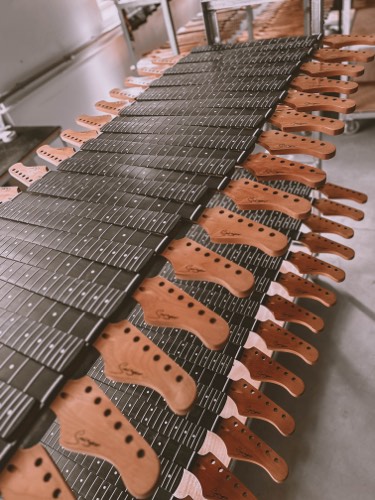
For a retailer, guitar care begins with a controlled check, not an immediate adjustment. Confirm the model and finish, record the condition in which the instrument was tested, tune it, inspect the visible hardware, and note any repeated noise or functional issue. Only then should the store decide whether the guitar can move to display, needs routine setup, or should be held for a technician or commercial review.
This order matters because the same symptom can have several causes. A buzz may be linked to a string, a setup point, a loose part or the way the instrument was tested. Tuning instability may come from a new string settling, a hardware issue or a handling problem. If staff begin turning screws before recording what they found, the original evidence is lost and the next person has to start again.
The purpose of an incoming setup check is therefore not to repair every guitar at the receiving bench. It is to give distributors and music retailers a repeatable way to separate observable condition, routine preparation and issues that need deeper review.
Packaging and product setup are connected, but they are not the same inspection. The musical-instrument packaging and incoming-condition guide covers cartons, internal supports, shipment evidence and the first record made during receiving. This guide begins after the instrument has been identified and removed from its packaging.
Before testing, follow the handling policy agreed for the model and the receiving environment. If the instrument has arrived after a marked temperature change, do not rush to judge its setup. Record the arrival time and current room conditions, then allow the instrument to settle according to the buyer’s own procedure and the current product guidance. A single universal waiting time or humidity number should not be applied to every construction, finish and climate without confirmation.
Keep the carton or case reference connected to the instrument until the check is complete. If an issue is found, the receiving team should be able to trace the model, finish, carton number and photographs without rebuilding the history later.
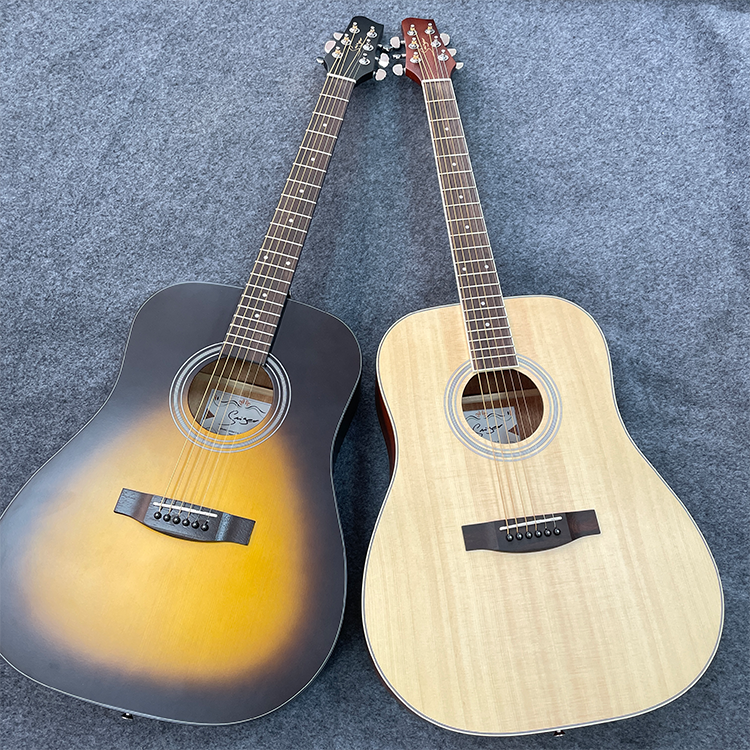 A full-product image helps staff confirm the model family, finish and visible inspection areas before testing begins.
Start with information, not opinion. A useful check sheet records:
order or shipment reference;
model and finish;
serial, batch or carton reference where available;
date, location and person completing the check;
strings and tuning used during the test;
amplifier, cable and basic settings for an electric guitar;
any time allowed between unpacking and testing;
photographs taken before any setup work.
This does not need to become a long report for every unit. The fields should be short enough for warehouse and store staff to use consistently. The important point is that two people testing the same model should be able to understand whether they used comparable conditions.
Model identification also prevents specification mistakes. The SMIGER GN-81D, for example, is published as a 41-inch acoustic guitar with a solid spruce top and sapele back and sides. Those facts belong to that model record. They should not be copied to a similar-looking acoustic guitar without checking its exact page or approved specification sheet. The same rule applies to pickup layouts, bridge types, scale lengths and finish names.
Look over the instrument in a fixed order so that small items are not missed. Begin with the body and finish, continue around the edges and neck joint, then move along the neck to the fret ends, nut and tuners. Finish with the bridge, strap buttons and any exposed controls or sockets.
Record what can be seen without assigning a cause too early. “Finish mark near the lower edge” is useful. “Damaged during shipping” is a conclusion that may not yet be supported. Photograph the full instrument, then take a closer image that shows the location and scale of the observation.
Hardware should be checked for presence, alignment and obvious movement. Do not tighten every screw as a routine reflex. Some components have model-specific settings, and careless tightening can mark the finish, damage a thread or change the setup. If a part appears loose, record the part and decide whether it falls within the store’s approved preparation procedure.
Cleaning also depends on the surface. Use a clean, suitable cloth for light dust and handling marks. Do not assume that the same polish or treatment is appropriate for gloss, matte, open-pore and unfinished surfaces. Check the current care guidance before applying a liquid product. The goal at receiving is a clean inspection surface, not an unnecessary finish treatment.
 Colour and hardware combinations should be checked against the exact LUXARS S-G20 record rather than identified from body shape alone.
An instrument should be brought to the agreed tuning before staff judge action, intonation behaviour or string noise. First inspect the strings for corrosion, kinks, obvious damage or incorrect installation. Then tune in a consistent sequence and allow new or recently disturbed strings to settle before making a final note.
If a string does not hold pitch, record which string is affected and what happens during a repeated test. Check whether the tuner post, string path or visible hardware shows an obvious issue, but avoid turning the observation into a diagnosis without evidence. A repeatable note is more useful than “tuning is bad.”
String replacement should follow condition, use and the store’s preparation standard. A fixed rule such as replacing every set after a certain number of months does not work for unopened stock, frequently demonstrated instruments and guitars stored in different environments. Stores need a condition-based routine and a record of what was changed.
Fret buzz is a symptom, not a complete diagnosis. Before any adjustment, identify when it occurs. Test the open string, selected frets across the neck and the same passage at a controlled attack level. Note whether the sound is acoustic, comes through an amplifier, or appears to be a separate hardware vibration.
A useful record answers five questions:
Which string or strings are involved?
Does the noise occur open, at one fret, across a fret range or across the neck?
Does it repeat at a moderate, consistent attack?
Is the instrument in the agreed tuning with the checked string set?
Can a second staff member reproduce the same result?
This information helps a technician distinguish between possible setup, string, fret and hardware factors. It also protects the store from treating every rattle as a bridge problem. Do not sand a saddle, file a nut slot or turn a truss rod simply because a buzz is present. Those steps change the instrument and require the correct measurements, tools and authority for the model.
An isolated sound that appears only under unusually heavy attack should also be described accurately. The receiving note should reflect the test, not convert a playing condition into a product claim.
For an electric guitar, isolate the test equipment before judging the instrument. Use a cable and amplifier known to be working, select an agreed clean setting, and keep the basic level consistent across the batch. If the signal cuts out, repeat the test with the reference cable before recording a guitar fault.
Check the output jack, pickup selector and each published control position. Move one control at a time and note the position in which any interruption, unusual noise or level change occurs. If a model includes additional onboard functions, use its current function sheet instead of assuming that it works like another guitar with a similar body.
The SMIGER L-G2-i3 illustrates why model-specific checks matter. Its published information includes an HSS Alnico V pickup layout and onboard functions. A receiving team needs a checklist that covers those listed functions; a generic test of “sound comes out” would not confirm the complete model record.
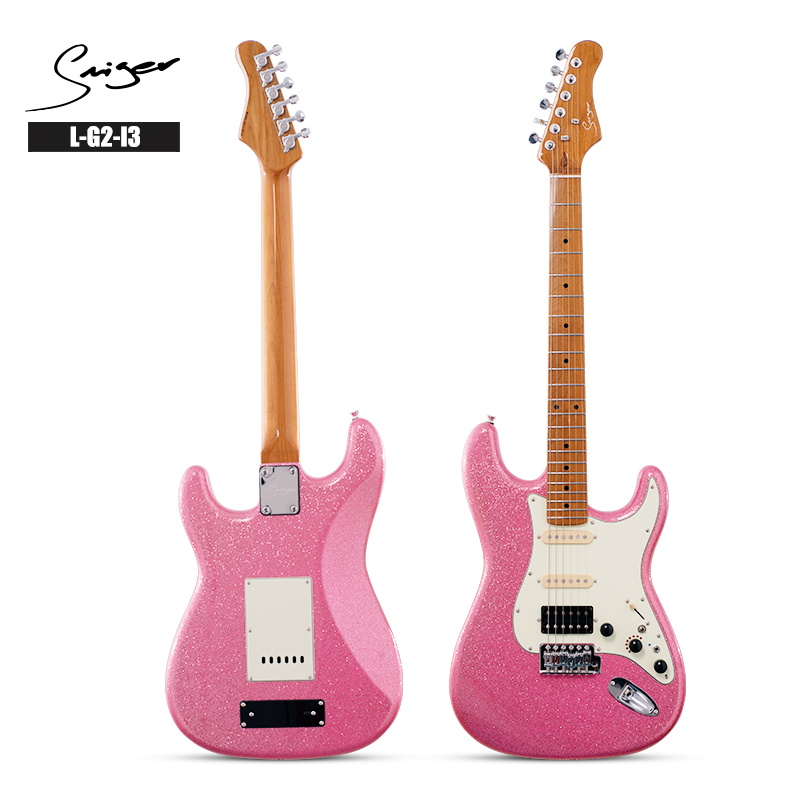 Front and back views help staff identify the correct model and the areas involved in hardware, control and output checks.
The check should end with a decision. Keep the categories simple enough that purchasing, warehouse, technical and sales teams understand them in the same way.
| Observation | Record before adjustment | Suggested disposition |
|---|---|---|
| Visible finish or hardware issue | Model, location, full and close photographs, quantity affected | Commercial review or technical check |
| Tuning instability | String, tuning, repeated test condition and visible string path | Recheck strings and approved hardware points; escalate if repeated |
| Buzz on an open string | String, tuning, attack level and whether a second person can repeat it | Setup or technician review; do not assume a bridge cause |
| Buzz at selected frets | String, fret range, tuning and test condition | Technician review with the recorded evidence |
| Separate hardware vibration | Location, note or action that triggers it, visible movement | Approved hardware check or technician review |
| Electric signal interruption | Reference cable and amplifier, selector position and control used | Isolate equipment first, then hold for product review if repeated |
| No issue found under the agreed check | Completed check sheet and tester | Release to display or stock according to store policy |
“Requires setup” and “commercial review” should remain separate. A routine setup point may be resolved before display. A finish issue, missing part or repeated batch concern may need purchasing input even when the guitar can be played.
A guitar that passes receiving can still change while it is used as a demonstration instrument. Give each display guitar a short record that includes tuning checks, string condition, visible handling marks and any customer-reported issue. Staff should know when the instrument was last inspected and what was changed.
Store instruments in stable, clean conditions appropriate to the product guidance. Avoid direct heat, prolonged sunlight, moisture exposure and unstable stands or hangers. Do not place household materials inside an instrument to manage humidity. Use suitable monitoring and guitar-specific products only when the model guidance and local procedure call for them.
After a string change or approved setup, repeat the relevant parts of the original check. Confirm tuning, playability and electrical functions rather than assuming that the work solved the reported symptom. Add the result to the record so the store can see whether the issue was isolated or recurring.
When several units show the same observation, summarize the evidence by model, finish, carton or batch reference and quantity checked. Include both affected and unaffected samples. This gives the buyer and product team a better basis for deciding whether to expand the inspection.
Use neutral wording and keep the original files. A short video can be useful for a repeatable noise or control interruption, while photographs are better for finish and hardware observations. State the tuning, equipment and test action in the file name or report so the evidence remains understandable after it is forwarded.
The SMIGER product-range guide and LUXARS electric-guitar range guide show why the inspection fields should follow the exact model. A compact travel guitar, a full-size acoustic and an electric guitar with additional functions do not need identical checklists.
An incoming check creates value only when its results change a commercial decision. Track saleable yield, time from receipt to display, routine setup minutes, repeated issue rate, return reasons and corrective-response time by model. These measures show where margin is being protected or lost more clearly than unit purchase price alone.
The goal is not to eliminate every setup task or force the lowest possible cost. It is to move more instruments into saleable condition quickly, reduce avoidable rework, protect staff time and give customers a consistent first experience. Better tuning stability, clean controls and clear model information support player confidence while also improving conversion and reducing preventable returns.
| Decision signal | Commercial meaning | Shared action |
|---|---|---|
| Saleable yield | How much of the shipment can move directly to display or stock | Separate normal preparation from repeatable exceptions |
| Time to display | How quickly inventory can begin contributing revenue | Improve receiving instructions, tools and model data |
| Repeat issue rate | Whether one observation is isolated or systematic | Share model, batch and evidence before changing the next order |
| Corrective-response time | How effectively the supply partner helps restore flow | Agree ownership, evidence and follow-up dates |
| Customer feedback and returns | Whether the receiving standard protects the end-user experience | Feed verified patterns back into specifications and training |
A capable supply partner should help the retailer interpret evidence, not simply argue over individual defects. Share the exact model, approved specification, test conditions, photographs and commercial impact. The supplier can then distinguish a receiving question from a setup task, packaging problem or repeatable production issue and propose a corrective action that purchasing, warehouse and technical teams can verify.
Use the same discipline when reviewing SMIGER range roles and LUXARS differentiation. Confirm the current specification for each model, compare verified performance over several receipts and expand orders only when consistency, response, turnover and unit profit contribution support the decision. This turns Vines Music from a source of isolated products into a partner in a more dependable category system.
No. The receiving process can use the same order of checks, but measurements and acceptance points should follow the instrument type, exact model, approved specification and the buyer’s technical standard. A universal action or relief number should not be applied without that context.
Record the string, tuning, fret location, attack level and whether the sound repeats for another tester. Note whether it is heard acoustically, through the amplifier or as a separate hardware vibration. Make that record before any adjustment.
Only when the business has an approved procedure, suitable tools and an authorised person for that work. Otherwise, the warehouse should record the observation and route the instrument to the store’s technician or designated setup team.
Use a known working cable and amplifier with consistent basic settings. Check the output, selector and every published control or onboard function for the exact model. Isolate the cable and amplifier before concluding that an interruption comes from the guitar.
Set the interval according to handling frequency, store conditions and the instrument’s role. A guitar played many times each week needs a different routine from protected stock. The store should also recheck an instrument whenever staff or customers report a repeatable issue.
A good incoming setup check does not depend on one experienced employee remembering everything. It uses a short model-specific record, controlled test conditions and clear dispositions. Staff confirm what arrived, describe what they can observe, and send the right cases to setup, technical or commercial review.
Send the model list, market and incoming issues you are reviewing. Discuss receiving and setup requirements with Vines Music.