


Selecting guitars for a student program is a procurement decision as well as a teaching decision. The instrument must fit the course structure, but the school or retailer also needs a workable system for receiving, identifying, storing and maintaining multiple units. A product that appears suitable in a single demonstration may create avoidable problems when twenty instruments need to be tuned, moved and checked before class.
The first step is not choosing a model. It is writing a short program brief. Student age range, class size, lesson format, storage, transport, teacher preferences and replacement procedure all affect the final range. The aim is not to declare one guitar universally best for education. It is to choose a small number of clearly documented roles and test them with the people who will teach and manage the instruments.
For most programs, the decision sequence is program role first, physical fit second and model specification third. After a teacher approves the role and size mix, the buyer can define receiving, labelling, storage, spares and replacement rules before the full quantity enters service.
Write the program brief before comparing models
A useful brief answers practical questions:
How many students use the instruments at the same time?
Are guitars assigned to individuals or shared between classes?
Does the course teach classical technique, general accompaniment, ensemble parts or a mixture?
Will instruments stay in one room or travel between sites?
Who checks tuning, strings and visible condition?
Is one size expected to serve the whole group, or will several sizes be available?
These answers prevent the product search from becoming a list of attractive specifications. They also help the retailer prepare a relevant comparison instead of presenting every guitar labelled “student.”
Do not use age as the only size rule
Size labels are useful, but they are not a complete fit assessment. Two students of the same age may have different reach, posture and prior experience. Teachers should evaluate the instrument with representative students where possible.
A 36-inch 3/4 classical guitar and a 39-inch classical guitar create visibly different physical formats. The smaller instrument should not automatically be described as the correct choice for every younger learner, and the full-size model should not automatically be reserved for advanced players. Program role, teacher method and individual fit still matter.
Record the published size accurately. Do not replace it with vague labels such as “kids guitar” unless the exact model documentation uses and supports that description.
Use the LC1-36 as a 3/4-size comparison point
The LC1-36 is published as a 36-inch, 3/4-size classical guitar. Its listed specifications include a solid cedar top, African sapele back and sides, mahogany neck, rosewood fingerboard, bone nut and saddle, and satin finish.
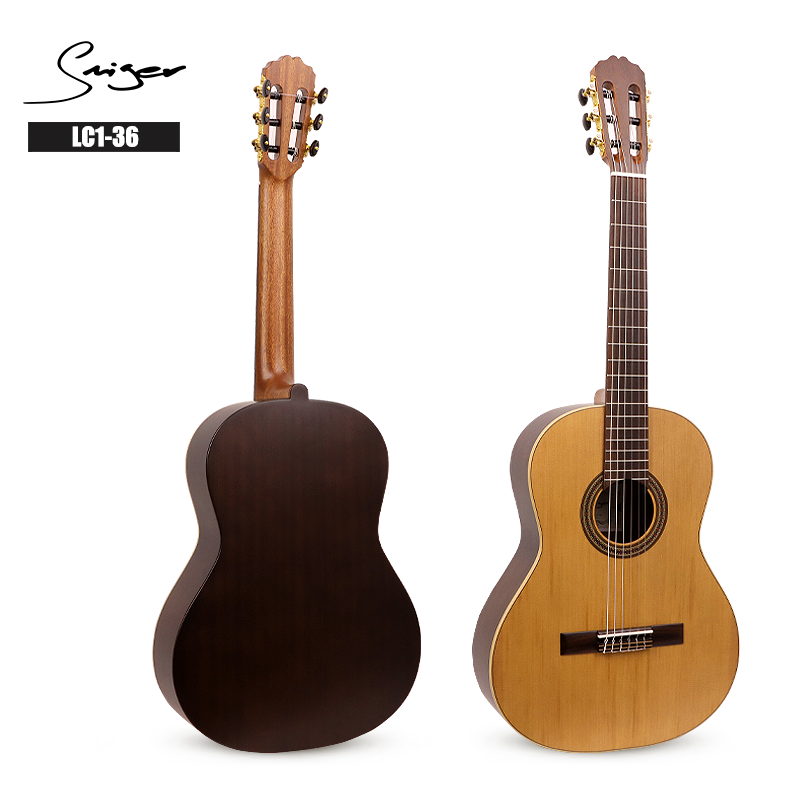
LC1-36: a 36-inch, 3/4-size classical guitar for a structured fit and program-role review.
For a school comparison, the important starting point is the 36-inch format. Teachers can assess how representative students hold and reach the instrument. The construction and finish fields give the buyer a precise record for quotations and receiving checks.
The solid cedar top should be stated exactly as published. It should not be expanded into an all-solid description. The satin finish can be recorded as a visible specification without promising that it will eliminate fingerprints, glare or maintenance work in every classroom.
Compare a full-size classical option separately
The SMIGER CGM-10D provides a full-size comparison. The current record lists a 39-inch classical guitar with spruce top, sapele back and sides, mahogany neck, engineered-wood fingerboard, natural matte finish, gold classical-style tuners and nylon strings.
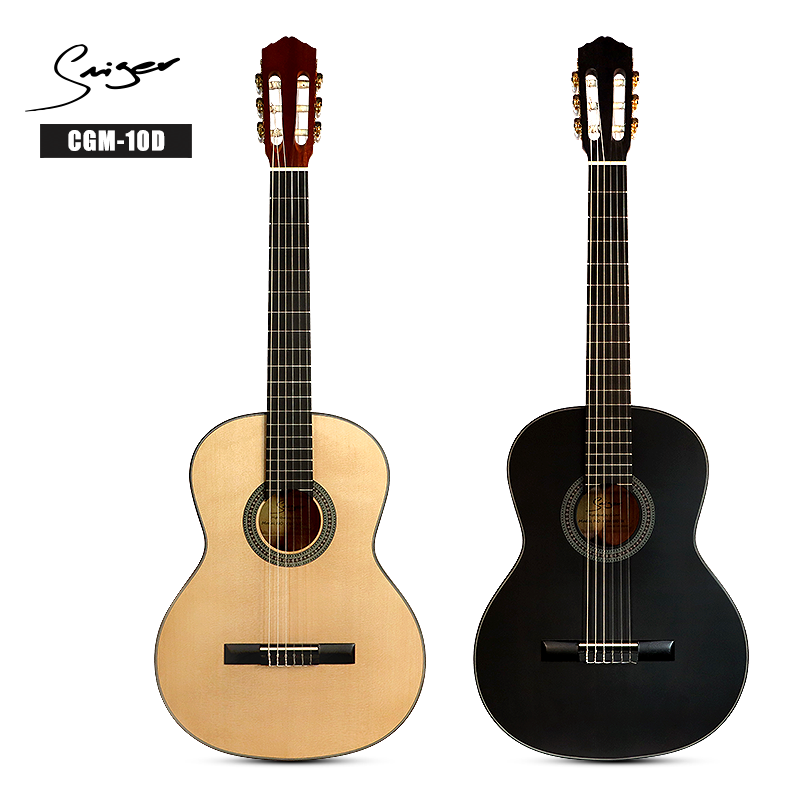
SMIGER CGM-10D: a 39-inch classical model for comparison with the 36-inch program option.
In the selection session, keep the 36-inch and 39-inch models under separate labels. Ask teachers to note reach, seated position, tuning routine and the lesson material they expect to use. Avoid asking only which guitar “feels better”; that answer is difficult to apply across a group without more detail.
If the program uses two sizes, establish an assignment rule and mark the inventory clearly. A mixed-size program can serve more students, but it adds receiving, storage and scheduling work. The benefit needs to justify the added complexity.
Add a steel-string acoustic only for a defined course role
Some programs include general accompaniment, ensemble work or songwriting activities that use a steel-string acoustic guitar. That does not mean a full-size acoustic model should be added automatically to a classical program.
The SMIGER GN-81D is published as a 41-inch acoustic guitar with a solid spruce top. It can serve as a clear full-size acoustic reference when the teacher has identified a steel-string role in the course.
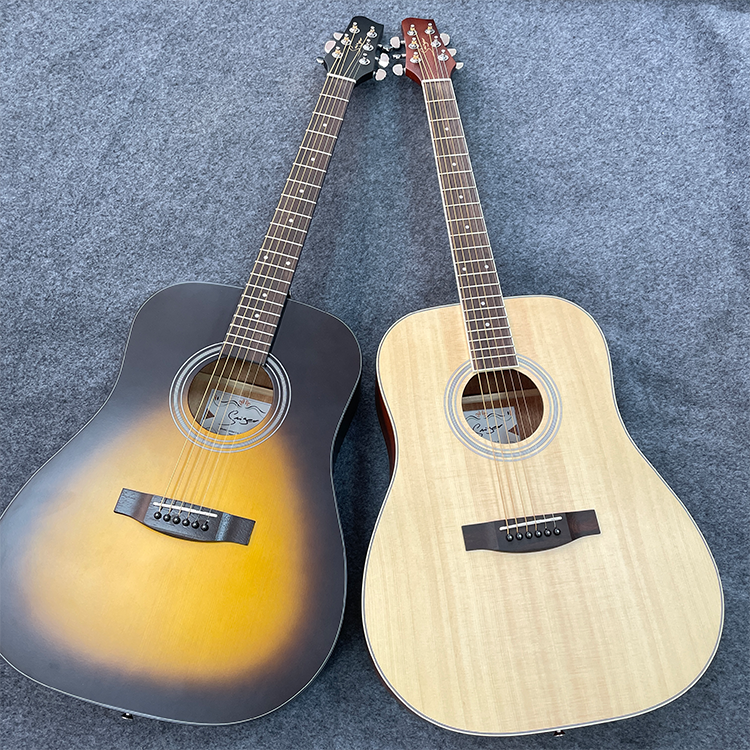
SMIGER GN-81D: a 41-inch steel-string acoustic reference for programs that require that category.
Keep the category difference explicit. Nylon-string classical and steel-string acoustic guitars should not be grouped only by price or colour. Teachers, receiving staff and students need to know which course or assignment each instrument supports.
Build a program comparison matrix
A short matrix turns the product discussion into a checkable decision.
| Field | LC1-36 | CGM-10D | GN-81D |
|---|---|---|---|
| Instrument category | Classical guitar | Classical guitar | Acoustic guitar |
| Published size | 36 inch, 3/4 size | 39 inch | 41 inch |
| String category | Confirm from current classical specification | Nylon strings | Steel-string acoustic category |
| Top specification | Solid cedar | Spruce | Solid spruce |
| Proposed program role | Smaller classical fit option | Full-size classical option | Defined acoustic-course extension |
Add local fields for storage position, asset label, teacher approval and assigned class. Do not add performance claims unless the school has defined a test and recorded the result.
Decide between one model and a controlled mix
One model simplifies ordering, storage, lesson preparation and spare parts. A controlled mix can address different physical formats or course roles. Neither approach is automatically correct.
If the school chooses one model, test whether the format works for the actual student group. If it chooses multiple models, keep the number of roles small. Three models with written assignment rules are easier to manage than eight loosely defined “student guitars.”
Retailers supporting the program should quote the exact model mix and avoid substituting a different size or construction without written approval. A familiar product name is not enough when the teaching team selected a specific format.
Create a receiving check for every unit
The receiving team needs a repeatable checklist that does not require a performance review of every guitar. It can include:
model and size match the order;
visible finish and category match the approved record;
no obvious transport damage;
tuners, bridge area and neck show no obvious loose or damaged parts;
strings are present and in usable receiving condition;
included items match the order;
asset label and storage location are recorded.
Separate receiving acceptance from final setup. A guitar can arrive without visible transport damage and still need the school’s normal preparation before class. Define who performs that work and how it is recorded.
Establish a baseline before instruments enter class
When several guitars are prepared by different people, small inconsistencies can become classroom problems. Use a baseline procedure approved by the teacher or technician. Record tuning reference, string type, visible action concerns, loose hardware and any unit held back for review.
Do not promise an exact setup specification unless it has been measured and agreed for the program. The goal is consistency and traceability, not an unsupported statement that every student requires the same measurement.
Keep one clearly labelled comparison unit if the program is large enough. It can help staff identify whether a later concern is limited to one guitar or appears across several units.
Plan storage, identification and movement
Asset labels should be readable without covering important finish areas or product information. Use a numbering format that connects the instrument to the receiving record, class assignment and maintenance history.
Storage should protect guitars from avoidable impact and make the correct size easy to return. If 36-inch and 39-inch classical guitars share a room, mark the rack or case position. Staff should not need to compare body dimensions before every lesson.
For programs that move instruments between sites, confirm cases, bags, carts or stands separately. Do not assume that an accessory fits because it is labelled “classical guitar.” Check the internal or contact dimensions against the selected model.
Create a spare and replacement rule
A program needs a response when an instrument is unavailable. Decide whether the school holds spare units, uses a repair rotation or relies on a retailer for replacement stock. The right quantity depends on class size, use frequency and service access.
Record the cause of each removal from service. Transport damage, string replacement, loose hardware and accidental impact require different responses. After a term, the record gives the buyer better information than a general impression that the guitars were “fine” or “difficult.”
When a model changes, compare the new specification with the approved program record before mixing it into the fleet. A similar appearance does not guarantee the same size, materials or hardware.
Run a small pilot when possible
A pilot allows teachers, students and receiving staff to evaluate different parts of the decision. Teachers can review lesson suitability, representative students can test the physical format, and operations staff can check labelling and storage.
Define the pilot questions in advance. For example: Which size is assigned most often? Which model requires repeated explanation? Are labels clear? Does the storage plan work? Are specification records complete?
Use the results to select the program mix. Avoid turning one person’s preference into a universal conclusion without checking the rest of the group.
Frequently Asked Questions
Is a 36-inch guitar suitable for every younger student?
No single size suits every student. The LC1-36 provides a 36-inch, 3/4-size option, but teachers should assess representative students and the course method before setting an assignment rule.
Why compare the LC1-36 with the CGM-10D?
They provide two documented classical-guitar formats: 36-inch 3/4 size and 39-inch full size. The comparison helps a program decide whether one size or a controlled mix is practical.
Should a steel-string acoustic be included in a classical course?
Only when the teaching plan defines a separate steel-string role. The GN-81D should be labelled as a 41-inch acoustic category rather than treated as another classical option.
What information belongs on a school receiving sheet?
Include brand, model, size, category, approved construction fields, visible condition, included items, asset number and storage location. Add setup or technical measurements only when the program has defined them.
How many spare guitars should a program hold?
There is no universal percentage. Base the decision on class size, usage frequency, service turnaround and the consequences of one instrument being unavailable. Review actual maintenance records after the first term.
Evaluate the Program by Lifecycle Value
A student program should be reviewed through fit, receiving pass rate, setup labour, maintenance frequency, spare-unit use and replacement continuity. The lowest initial unit cost can become expensive when instruments require repeated correction or cannot be replenished consistently.
Share class feedback, failure patterns and replacement timing with Vines Music. This gives the school, retailer and supplier a common basis for improving the next intake and protecting the total value of the program.
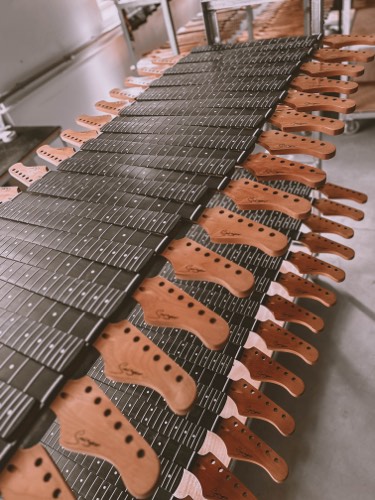
Build a Long-Term Program Supply Partnership
A student program should be managed as a multi-term supply system, not as a one-time search for the lowest unit price. Schools, retailers and their supply partner need a shared record of receiving condition, setup consistency, classroom availability, replacement demand and teacher feedback. These measures show whether the program remains usable after the first delivery.
The student and teacher experience is the final test. Instruments that arrive ready for class, remain identifiable and can be replaced without disrupting lessons create value for the learner while reducing hidden work for the school and retailer.
| Metric | What it reveals | Decision supported |
|---|---|---|
| Ready-to-class rate | Share of received instruments released without extra corrective work | Evaluate batch consistency and receiving requirements |
| Repeat setup variance | Whether the same adjustment appears across multiple units | Open a documented corrective-action discussion |
| Instrument availability | Lost teaching time caused by repair, shortage or replacement delay | Set spare depth and response expectations |
| Replacement response time | How quickly a verified replacement can enter the program | Protect lesson continuity and trust |
| Cost per active student term | Purchase, setup, service and replacement cost over actual use | Compare lifecycle value rather than invoice price |
| Renewal and expansion rate | Whether teachers and administrators choose the system again | Plan future range and supply capacity |
A school-focused range can begin with clear roles from the SMIGER guitar range. Where a program later adds amplified or performance modules, selected LUXARS electric-guitar roles should be introduced only when course requirements, storage, amplification and support are defined.
Review the data with Vines Music after the pilot and at each replenishment cycle. Information sharing allows both sides to improve model selection, packaging, receiving checks and replacement planning. That value collaboration is more defensible than a transaction based only on a low opening price.
Related Buyer Guides
Select the system, not only the guitar
A student program needs instruments, but it also needs a method for fit assessment, receiving, preparation, labelling, storage and replacement. Write the brief first, compare a small number of documented roles and involve the teachers and staff who will manage the guitars. That process produces a more reliable decision than choosing from a broad “beginner” label.
Review the current Classical Guitar category and use the packaging and incoming-condition guide when writing the receiving plan. To discuss a program range, contact Vines Music, email info@vinesmusic.com, or send a WhatsApp message to +86 13826092986.