
English
Views: 0 Author: Vines Music Editorial Team Publish Time: 2026-10-13 Origin: Site


Direct answer: soprano, concert, tenor and baritone ukuleles should be treated as distinct retail roles. Soprano, concert and tenor models commonly use G-C-E-A tuning, while baritone ukuleles commonly use D-G-B-E. Size also changes scale length, fret spacing, case fit and replacement-string requirements. A useful range gives buyers a clear reason to choose each format instead of presenting larger sizes as automatic upgrades.
This guide helps music stores, distributors and education buyers build a size ladder, qualify customers, inspect samples and publish accurate product data. Exact dimensions, tuning and included items must still be checked on the current model record.
Format | Common retail role | Fields to verify | Support requirement |
|---|---|---|---|
Soprano | Compact traditional-size entry point | Scale, overall length, nut width and tuning | Soprano strings and case |
Concert | More fret spacing in a still-compact format | Scale, body depth, fret count and tuning | Concert strings and case |
Tenor | Longer scale for players seeking more room | Scale, fret access, electronics and tuning | Tenor strings and case |
Baritone | D-G-B-E role and guitar-adjacent transition | Tuning, scale, strings and teaching method | Baritone-specific strings and case |
Soprano, concert and tenor instruments commonly share G-C-E-A tuning, although stringing choices and low-G configurations can vary. Baritone ukuleles commonly use D-G-B-E. That difference affects chord resources, lesson materials, replacement strings and staff explanations. Put the verified tuning in the product record and on the display card.
Do not assume every instrument follows the common pattern. Confirm the exact SKU, factory string set and intended tuning before publishing. A buyer comparing body sizes needs to know whether the musical system remains familiar or changes with the format.
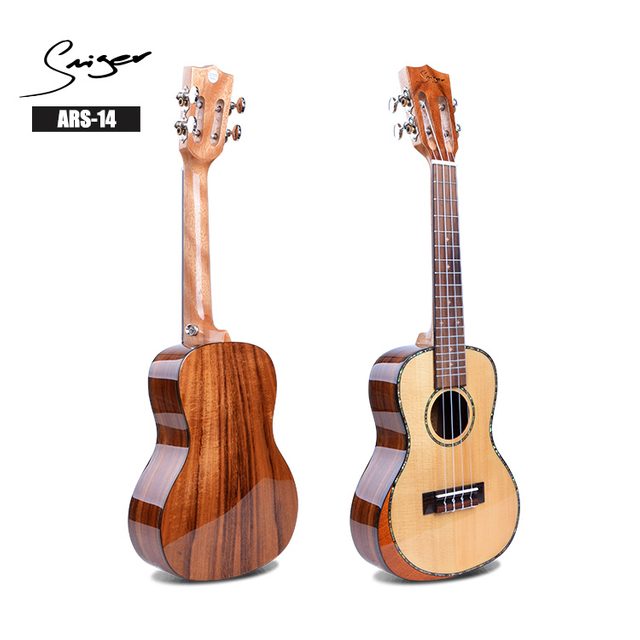
A real catalog image helps identify the model; its scale, tuning and included items still require the current product record.
“Soprano,” “concert,” “tenor” and “baritone” are useful category names, but receiving teams and online buyers need measured data. Record scale length, overall length, nut width, body width and depth, fret count, weight when verified, and case dimensions. Use one measurement method across the range.
Longer scale length generally creates wider fret spacing, but neck profile, nut width, setup and string specification also affect feel. Describe the exact instrument rather than promising that one size is easier for every hand.
A soprano can serve shoppers prioritizing compactness and a familiar traditional format. A concert can provide a middle position between compact handling and more fret spacing. A tenor can suit buyers asking for a longer scale, upper-fret access or model-specific electronics. A baritone serves a separate tuning and learning route.
These are qualification prompts, not fixed player rules. Ask about repertoire, existing instruments, teaching materials, hand fit, travel, amplification and storage. Then compare a small set of suitable models under the same tuning and setup conditions.
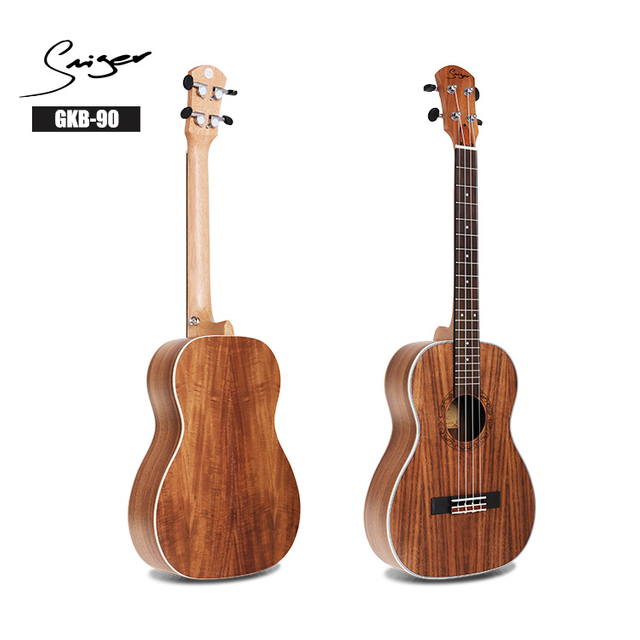
Baritone belongs in a separate tuning and accessory workflow rather than being presented only as the largest ukulele.
A body-size label does not establish who can play it. Let the customer check seated or standing balance, first-position reach, chord spacing and right-arm comfort. For children and school programs, involve the teacher or program lead and document the intended teaching method.
A shorter instrument can improve reach for one player while feeling crowded to another. A larger body can create more room at the frets while creating a new reach issue around the body. Record what the player actually compared and why a model was selected.
Replacement strings must match the intended size, tuning and bridge arrangement. A set labelled for soprano, concert or tenor should not be applied to a baritone by guesswork. Confirm the maker’s string reference or an approved equivalent, and record whether the instrument uses high-G or another verified configuration.
Cases and bags should be checked against the exact overall and body dimensions. Do the same for wall hangers, stands and shipping cartons. A generic “ukulele accessory” label creates avoidable fit problems and returns.
Send Vines Music your market, target price tiers, preferred sizes, tuning, electronics, packaging and quantity requirements. We can organize a current model-level discussion.
Confirm model code, size label, scale, tuning, nut width, fretwork, neck condition, bridge, tuners, finish, electronics and included items. Tune the sample, check basic intonation and control operation, and document any preparation needed before a customer trial.
Photograph the complete front, bridge, headstock and any pickup controls. If the received sample differs from the listing image or data sheet, stop the content workflow until the version is resolved. Do not borrow dimensions from a similar-looking instrument.
Place the size, scale and tuning near the beginning of every listing. Add nut width, body measurements, materials as verified, finish, electronics, included case or bag, string reference and package details. Images should show the actual model and use literal alt text.
Link size-specific listings to the existing beginner-friendly ukulele range guide so buyers can connect model data with assortment planning. Keep variant names consistent between product pages, quotations and cartons.
Place one prepared sample from each role together only when staff can explain the differences. Use the same short musical task, tuning check and listening position. If amplification is fitted, test it separately through a known signal path.
Do not claim that a larger ukulele is automatically louder, better or more professional. Construction, strings, setup, room and player affect the result. Report observations from named samples and preserve the model-level conditions.
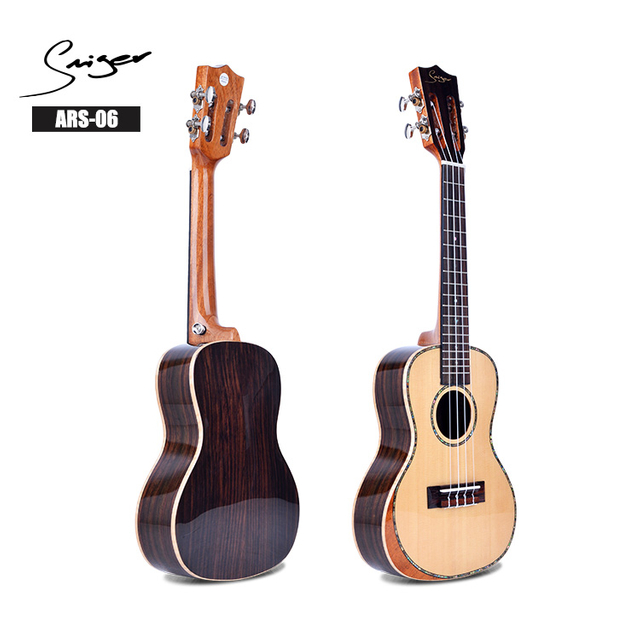
Retail comparisons should use prepared samples and verified dimensions rather than size stereotypes.
Evidence | What to record | Decision supported |
|---|---|---|
Qualified enquiry | Use, current instrument, size requested and reason | Which roles deserve display depth |
Trial result | Models compared, setup state and selection reason | Whether the size ladder is clear |
Accessory request | Strings, case, pickup and replacement question | Which support stock is required |
Return or service | Exact SKU, condition, stated issue and resolution | Content, setup or range correction |
Stock result | Age, sell-through and staff explanation | Maintain, deepen or reduce a role |
Review the data after a meaningful sales period. Separate true size demand from effects caused by price, missing product information, poor setup or lack of accessories. One popular SKU does not prove that every model of that size deserves expansion.
At receiving, reconcile the carton, model, size, tuning, included items and finish. Inspect for visible shipping issues, tune the instrument and test fitted electronics. Use the site’s packaging and incoming-condition guide to keep evidence and corrective action traceable. Label the display or school inventory with the correct string and case references.
For dealer or school handover, provide the verified tuning, basic restringing route, storage guidance and service contact. A baritone should not leave the channel with G-C-E-A materials unless the exact product is designed and strung for that configuration.
Answer: there is no single ukulele size that every retailer should stock most deeply. Choose the core size from local lesson methods, customer use, trial results and repeat accessory demand, then review sell-through and returns by exact SKU rather than by size label alone.
Treat baritone demand separately because its common D-G-B-E tuning changes lesson materials and string requirements. For soprano, concert and tenor, record why buyers chose each format—compactness, fret spacing, travel, electronics or repertoire—so the next order reflects observed demand instead of a generic beginner assumption.
Answer: soprano, concert and tenor ukuleles commonly use G-C-E-A tuning, so many chord shapes and learning resources transfer across the three formats. That common tuning does not make their strings or setups interchangeable.
Before publishing or restringing a model, verify its scale length, intended high-G or low-G configuration, string material and maker-approved set. A listing should state the tuning and string reference separately; this prevents a customer or service team from assuming that any G-C-E-A set will work correctly on every size.
Answer: baritone ukuleles commonly use D-G-B-E tuning, unlike the G-C-E-A tuning commonly used on soprano, concert and tenor models. D-G-B-E matches the four highest-pitched strings of standard guitar tuning, which changes the chord resources and replacement-string set a buyer needs.
Retailers should display the verified tuning beside the size label and keep baritone strings, cases and teaching materials identifiable. Do not assume every baritone follows the common pattern; confirm the exact SKU, factory stringing and intended tuning before quoting or publishing it.
Answer: no. A ukulele case must match the instrument’s overall length, body dimensions and depth, while a string set must match the scale length, tuning, bridge design and maker’s specification.
Measure the actual instrument and compare it with the case’s internal dimensions instead of relying on a generic “ukulele” label. For strings, record whether the set is intended for soprano, concert, tenor or baritone and whether the model uses high-G, low-G or another approved configuration. Verify both items on a sample before ordering them as a bundle.
Answer: no. A larger ukulele changes scale length, fret spacing, body dimensions and often its retail role, but size alone does not establish construction quality, setup quality, volume or suitability for a player.
Compare named models under the same conditions: verified tuning, fresh or documented strings, prepared setup and the same short playing task. Ask the player about reach, balance and repertoire, then verify materials and specifications from the current model record. The useful choice is the format that fits the intended player and use, not the largest option.
The common size and tuning relationships above are supported by Martin Guitar’s ukulele body-size guide and Lanikai’s ukulele care guide. These sources describe category-level conventions; Vines Music model dimensions, tuning, strings and included items still require current SKU-level verification.
A useful ukulele range explains what changes from soprano through baritone and what stays model-specific. Verified tuning, measurements, strings, cases and sample checks turn four labels into practical buying choices.
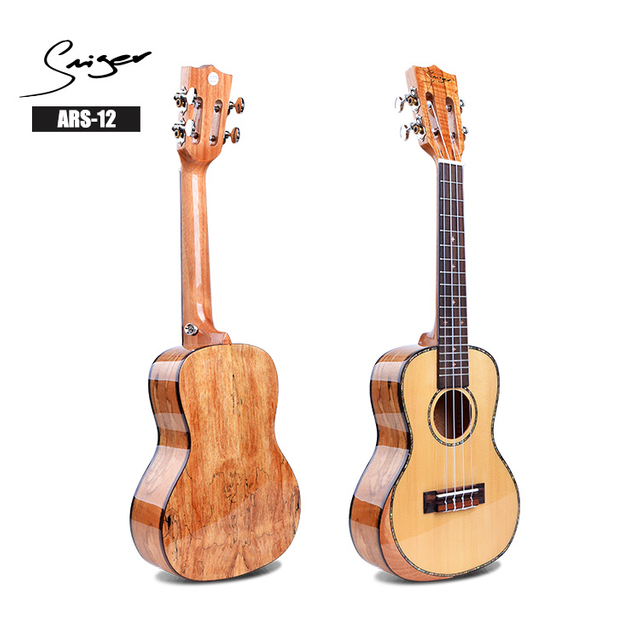
A second current catalog example supports assortment review while specifications remain tied to its own SKU.
Tell Vines Music which customer groups, sizes, tuning, accessories and quantities you are reviewing.