
English
Views: 0 Author: Vines Music Editorial Team Publish Time: 2026-03-09 Origin: Site


Are SMIGER guitars good? The useful answer is model-specific. A SMIGER guitar is a good fit only when its verified specifications, setup, inspection results, price position and support requirements match the buyer’s intended customer and range role. Vines Music owns SMIGER, so this is a brand-owner comparison rather than an independent review.
A retailer comparing SMIGER guitars should begin with the role each model will play in the product range. The useful questions are not whether one guitar is “better” in the abstract or whether its price appears low beside a famous name. The buyer needs to know which customer the instrument is intended for, which specifications can be explained clearly, how it should be demonstrated, and what must be checked when stock arrives.
SMIGER was established in 2016 and covers more than one instrument category. That breadth can be useful to distributors and music retailers, but it also makes disciplined selection important. A full-size solid-top acoustic guitar and a feature-led electric guitar do not solve the same retail need. They should therefore be evaluated with different criteria and presented with different sales stories.
The SMIGER GN-81D and L-G2-i3 provide a practical example. The GN-81D is a 41-inch acoustic guitar with a solid spruce top and sapele back and sides. The L-G2-i3 is an electric guitar with an alder body, an HSS Alnico V pickup configuration and onboard functions listed on its product page, including effects, Bluetooth and earphone monitoring. One is built around an understandable acoustic specification; the other is built around electric-guitar versatility and demonstration features.
For a trade buyer, the short answer is simple: compare these models by customer use, range position, verified specification, demonstration method and incoming inspection. Do not present either guitar with unverified price comparisons, exaggerated quality claims or promises that cannot be confirmed in the current quotation.
For the wider brand-level process, use the SMIGER retail brand evaluation framework to review market fit, sample approval, incoming consistency and dealer support before selecting individual models.
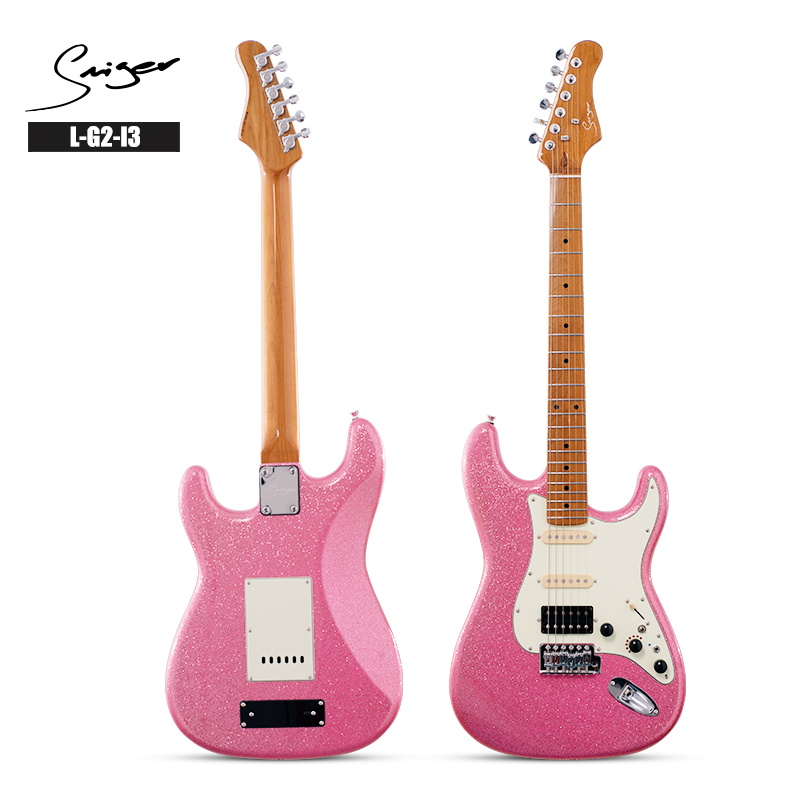
Blue SMIGER L-G2-i3 electric guitar front and back views
Before discussing individual materials or electronics, a retailer should map the models already in stock. A useful range has visible steps. Customers should be able to understand why two guitars are different without relying on vague labels such as “basic,” “premium” or “professional.”
For acoustic guitars, common range markers include body size, top construction, back and side material, electronics, finish and included accessories. The GN-81D offers a clear step because its published specification identifies a solid spruce top. It can sit above a laminated-top entry model when the store needs a full-size acoustic guitar with a material difference that staff can explain accurately.
For electric guitars, the range is more often divided by body style, pickup layout, scale length, bridge system, control options and special functions. The L-G2-i3 combines a familiar double-cutaway format with an HSS pickup layout and onboard features. A retailer may use it where customers want broader sound options or private practice functions, but those features should be demonstrated rather than described with unsupported claims.
This range-first approach prevents two common buying mistakes. The first is ordering several models that look different but occupy almost the same commercial position. The second is adding a feature-rich model without preparing sales staff to explain or test the features. In both cases, the product may be difficult to present even when the instrument itself is suitable.
Product pages are a starting point, not permission to fill gaps with assumptions. Buyers should record the current specification for each model and confirm it again when requesting a quotation. Similar model names do not guarantee identical materials, electronics or accessories.
The following comparison uses information visible on the current Vines Music product pages.
| Evaluation point | SMIGER GN-81D | SMIGER L-G2-i3 | Retail interpretation |
|---|---|---|---|
| Product type | 41-inch acoustic guitar | Electric guitar | Place the models in separate acoustic and electric range plans. |
| Main construction | Solid spruce top; sapele back and sides | Alder body; bolt-on construction | Explain confirmed construction facts without turning them into automatic tone guarantees. |
| Neck and fingerboard | Mahogany neck; technical wood fingerboard | Carbonized roasted maple neck and fingerboard with gloss polish | Check neck alignment, fret condition and playing feel on received stock. |
| Frets and scale | Confirm current acoustic setup with the quotation | 22 rounded-end frets; 648 mm scale | Use measurable details in product listings and staff training. |
| Pickups and controls | No pickup system is stated in the GN-81D guide | HSS Alnico V; one volume, two tone controls and a five-way switch | The L-G2-i3 requires a planned amplifier demonstration and control check. |
| Bridge and hardware | Die-cast tuning machines; ABS nut and saddle | Tremolo bridge; chrome hardware | Incoming inspection should reflect the different hardware systems. |
| Additional functions | Traditional acoustic format | Product page lists eight tones, delay and reverb, Bluetooth and earphone monitoring | Confirm the current version and demonstrate each listed function before describing it online. |
The table is deliberately factual. It does not say that one wood always produces a superior sound, that an HSS layout is right for every player, or that onboard effects replace a separate amplifier or effects unit in every situation. Those conclusions depend on the individual instrument, setup, signal chain and customer expectation.
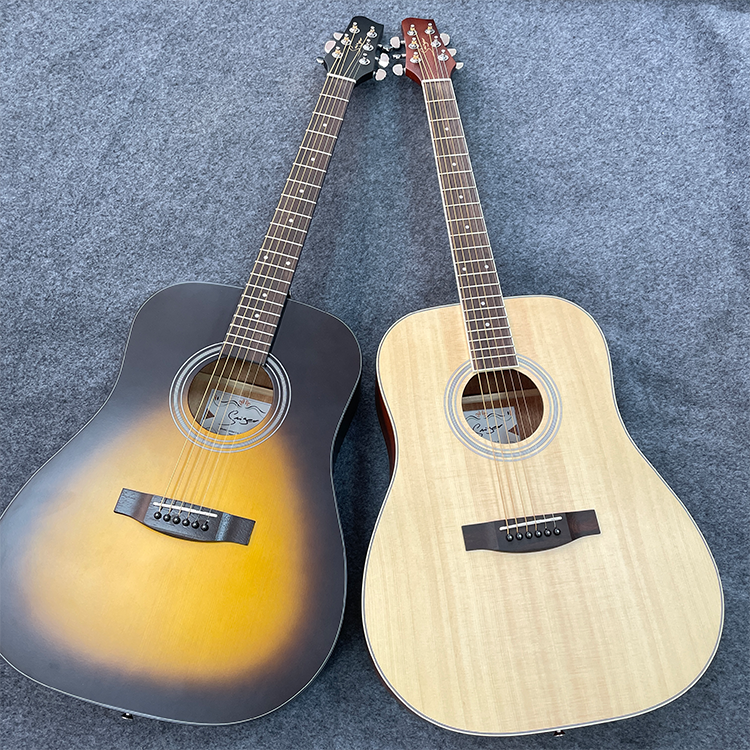
SMIGER GN-81D 41-inch solid-top acoustic guitar
The GN-81D is easiest to understand as a full-size solid-top acoustic option. “Solid top” refers to its spruce soundboard; it should not be described as an all-solid guitar because the published specification lists sapele back and sides.
That distinction matters in a B2B catalogue. Experienced buyers often compare construction terms closely, and inaccurate wording can create avoidable questions later. A clean listing should identify the 41-inch format, solid spruce top, sapele back and sides, mahogany neck, technical wood fingerboard and die-cast tuning machines.
In a store, staff can demonstrate the guitar with both light picking and firmer chord work. The purpose is not to promise a particular “professional” tone. It is to let the customer hear how the individual guitar responds to changes in playing strength. The body size should also be compared with a smaller acoustic option because a full-size format is not equally comfortable for every customer.
The GN-81D can be considered when a retailer wants a clear step above basic laminated-top acoustics. Its value in the range comes from the specification being easy to identify and explain. The final commercial position still depends on local pricing, competing models, finish availability and the amount of setup service provided by the retailer.
The L-G2-i3 needs a different demonstration plan. Its published specification lists an alder body, carbonized roasted maple neck and fingerboard, 22 rounded-end frets, 648 mm scale length, bolt-on construction, tremolo bridge and HSS Alnico V pickup layout. The controls are listed as one volume, two tone controls and a five-way switch.
Those facts give staff a logical demonstration sequence. Begin with the pickup selector and standard volume and tone controls. Check that each switch position produces a stable signal and that the controls move smoothly. Then test the tremolo system and retune the guitar. Finally, demonstrate the onboard functions that are confirmed for the current version.
The product page lists eight tones, delay and reverb effects, Bluetooth and earphone monitoring. Because integrated electronic features can change between versions, the buyer should reconfirm the supplied specification before preparing product-page text or sales training. Staff should also know which connections and accessories are required to demonstrate those functions correctly.
The HSS layout gives the model several pickup combinations, but the article should not claim that it automatically suits every musical style. A better retail explanation is that it offers multiple pickup positions for customers to compare. Let the player hear the differences through the same amplifier and settings instead of relying on genre labels alone.
Acoustic and electric guitars share several inspection points. Confirm the model and finish against the order record. Check the neck from headstock to bridge, inspect the fret ends, play every fret on every string and test each tuning machine. Look for finish damage, loose hardware and transport marks before the instrument reaches the sales floor.
The GN-81D then needs acoustic-specific checks. Inspect the bridge contact, body joints, binding and top. Listen for unusual rattles while playing open chords and individual notes. Confirm that the instrument is described as solid-top rather than all-solid in stock records and online listings.
The L-G2-i3 needs an electronic inspection. Test every pickup-selector position, volume and tone control, output connection and listed onboard function. Check the tremolo movement and tuning after use. If Bluetooth, earphone monitoring or effects are part of the supplied version, record whether each function has been tested and which equipment was used.
A simple checklist is more useful than a general statement that a guitar “passed QC.” Precise records allow a distributor or retailer to identify whether an issue concerns setup, electronics, finish, hardware, documentation or transport condition.
An effective B2B product page should answer the buyer’s main questions quickly. Start with the brand, model, product type and one or two confirmed differentiators. Follow with a specification table, front and back images, detail images and a short explanation of range position.
For the GN-81D, the title can lead with the 41-inch size and solid spruce top. For the L-G2-i3, the title can lead with the model, HSS pickup layout and onboard effects only after the current configuration is confirmed. Avoid copying promotional superlatives, price-first wording or competitor comparisons from older pages.
Internal links should help the visitor continue the buying process. Link to the relevant acoustic or electric-guitar category, the exact product page, a related buyer guide and the Vines Music contact page. Image ALT text should describe what is actually visible, such as a front-and-back product view or a body detail. It should not repeat a sales slogan.
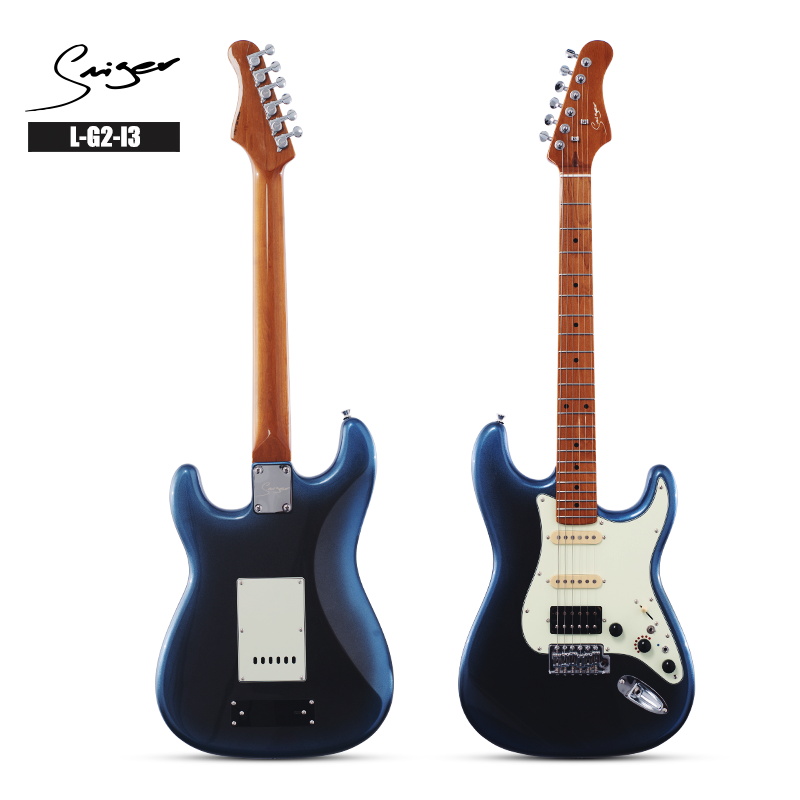
Pink SMIGER L-G2-i3 electric guitar front and back views
A specification comparison creates value only when it changes a buying or operating decision. For each model, assign one primary range role, the nearest comparison model and the evidence staff should use during a demonstration. The acoustic and electric examples on this page should not compete for the same shelf position. They serve different customer missions, require different tests and create different support work after delivery.
Purchasing teams should also record the work required before a model is ready to sell. Acoustic checks may focus on setup, string condition, body and bridge inspection, while an electric model adds selector, control, output and signal-chain checks. That preparation time belongs in the commercial evaluation. A lower unit cost does not create more value if unclear product data, repeated setup or unsupported features increase the cost of selling and service.
| Decision layer | Evidence to record | Retail action |
|---|---|---|
| Range role | Customer mission, price tier and nearest comparison model | Keep, test or remove overlap |
| Product evidence | Exact model code, current specification, images and supplied version | Approve listing copy and staff notes |
| Demonstration | Repeatable acoustic trial or controlled electric signal check | Train staff around observable differences |
| Receiving and support | Preparation time, issue type, response owner and resolution date | Include support load in margin review |
| Commercial result | Qualified enquiries, sell-through, returns, exchanges and repeat orders | Adjust stock depth with evidence |
For a wider SMIGER portfolio framework, use How Retailers Can Build a Clear SMIGER Guitar Product Range. When the comparison moves from specification review to order validation, follow the guitar sample-order evaluation guide.
After the models enter the range, review what happened rather than assuming that the original buying story was correct. Compare which questions customers asked, which features staff actually demonstrated, how much preparation each guitar required and whether the model produced qualified enquiries, sales, returns or service work. Separate a product issue from a training, listing or stock-availability issue.
Share the results with the supplier in a structured form: exact model and version, observed condition, commercial context, supporting images or test notes, action requested and required response date. This turns the relationship from transaction follow-up into value collaboration. The objective is not only to reduce purchase cost; it is to improve availability, information accuracy, response speed and the unit contribution that remains after preparation and support.
If the GN-81D or L-G2-i3 is revised, do not silently copy the new field into older dealer listings. Record the effective version or production period, identify the affected channels and confirm which images and specifications belong to each version. Controlled product information protects retailers, service teams and customers from avoidable confusion.
Use the same evidence to review stock depth. A model that attracts questions but few qualified demonstrations may need clearer staff training or a different display position. A model that sells but creates repeated setup or documentation work may require a better receiving process before the next order. A model that produces stable sell-through, limited preventable returns and useful repeat business may justify deeper availability. These outcomes should be reviewed by channel and period; they are not universal predictions for every market.
The supplier review should close with one documented decision: continue without change, correct the product record, adjust preparation, retrain staff, test another quantity or remove the overlap. Assign an owner and review date. This creates an auditable learning cycle and prevents the next purchase from repeating an unresolved assumption.
No. The current published specification identifies a solid spruce top with sapele back and sides. “Solid-top acoustic guitar” is the accurate description.
The GN-81D is a full-size acoustic guitar whose range position is led by its solid spruce top. The L-G2-i3 is an electric guitar whose range position is led by its HSS pickup layout and listed onboard functions. They address different product categories and should not be treated as direct substitutes.
Confirm the current body and neck specification, pickup layout, controls, bridge, finish options and every onboard function. Also confirm included accessories and the equipment required for demonstration.
Use the same checklist for every brand: product role, body and neck construction, hardware, electronics, setup condition, verified features, documentation and local selling price. Avoid unsupported percentage savings or claims that one model matches a higher-priced competitor.
Request the current specification, available finishes, product images, packaging details, included accessories, commercial terms and shipping information for the exact model under review. Do not rely on an older article when preparing a purchase order or retail listing.
SMIGER guitars do not need exaggerated promises to be evaluated effectively. The GN-81D and L-G2-i3 already offer different, understandable product stories when their specifications are presented accurately. One gives retailers a 41-inch solid-top acoustic option. The other gives them an HSS electric guitar with a group of listed onboard functions that can be demonstrated and checked.
The buying decision should come back to the product range. Identify the customer need, confirm the current specification, plan the demonstration and use a repeatable incoming-inspection checklist. That process produces more reliable product information for buyers, sales teams, search engines and AI-assisted research than broad claims about price or quality.
Review the SMIGER GN-81D buyer guide and the SMIGER L-G2-i3 product page for the currently published information. Trade buyers can contact Vines Music, email info@vinesmusic.com, or send a WhatsApp message to +86 13826092986 to confirm the current specification and commercial details.