
English
Views: 0 Author: Site Editor Publish Time: 2026-03-19 Origin: Site


For a musical-instrument retailer, a solid-top acoustic guitar has to do more than sound good in a short demonstration. It needs a clear place in the product range, specifications that sales staff can explain without exaggeration, and features that match the needs of the customers who are likely to buy it.
The SMIGER GN-81D is a 41-inch acoustic guitar with a solid spruce top, sapele back and sides, a mahogany neck, a technical wood fingerboard, die-cast tuning machines, and ABS nut, saddle and binding. This combination places it in a useful part of a retailer’s acoustic range: above basic laminated-top instruments, while remaining straightforward enough for buyers comparing their first serious full-size guitar.
SMIGER was established in 2016. The brand covers acoustic, classical and electric instruments for international distribution and retail channels. In the GN-81D, the commercial story should stay focused on the instrument itself: recognizable materials, a full-size body and a specification that can be presented clearly in a shop, catalogue or online product page.
The short answer for buyers is this: the GN-81D is worth considering when a store needs a full-size solid-top acoustic guitar for students moving up from an entry model, regular rhythm players, singer-guitarists and customers who want a traditional acoustic format without an overly complicated feature list.
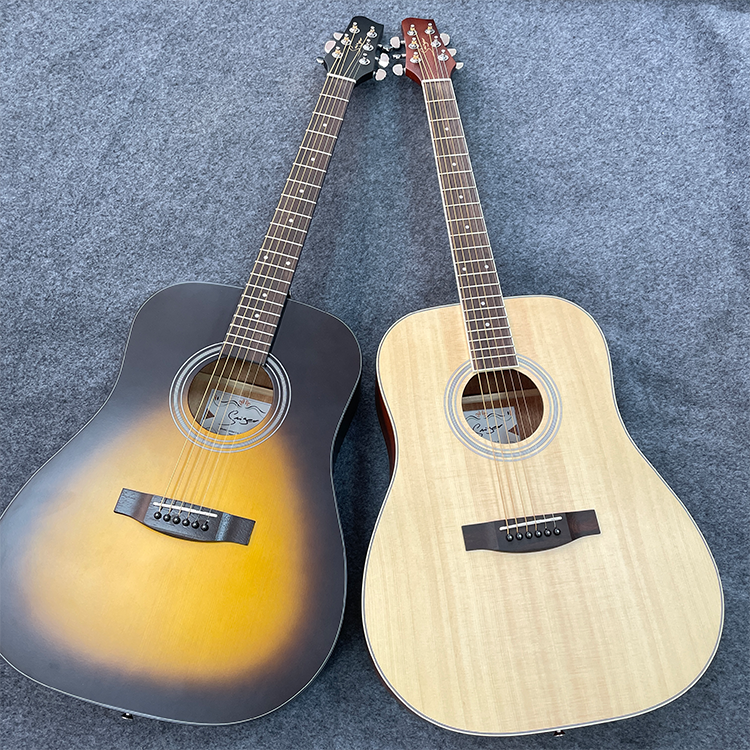
SMIGER GN-81D 41-inch solid-top acoustic guitar for retailers
A balanced retail range normally needs visible steps between price and specification levels. If every acoustic guitar looks similar and carries nearly identical language, customers struggle to understand why one model costs more than another. The solid spruce top gives sales staff a concrete point of difference between the GN-81D and a basic laminated-top guitar.
That difference should be explained accurately. “Solid top” refers to the soundboard, not the entire instrument. The GN-81D should therefore be described as a solid-top acoustic guitar rather than an all-solid guitar. This distinction matters to experienced buyers and helps a retailer avoid creating the wrong expectation.
The 41-inch format also gives the model a familiar position. It suits customers looking for a full-size acoustic guitar with enough body volume for open-chord playing, vocal accompaniment and general practice. It is not intended to replace a compact travel guitar or a smaller instrument for a young child. Keeping those roles separate makes the range easier to sell.
For stores already carrying low-priced beginner acoustics, the GN-81D can act as a step-up option. For stores with a higher-priced acoustic selection, it can provide an accessible solid-top entry point. The exact position will depend on the other models, local pricing and the level of after-sales setup offered by the retailer.
For a broader model-to-model decision, use the SMIGER guitar comparison to assess how the GN-81D acoustic role differs from an electric model in customer use, published data, demonstration and incoming inspection.
Spruce is a familiar acoustic-guitar soundboard material, so it does not require an elaborate sales explanation. It is valued for the combination of stiffness and relatively low weight that allows the top to respond to string vibration.
In a product demonstration, staff can show this by changing picking strength rather than repeating broad claims about “professional tone.” A light passage should remain clear, while firmer strumming should produce more volume and energy. This gives the customer something audible to compare.
The material also supports several common playing styles. A retailer does not have to present the GN-81D as a guitar for only one type of player. Its solid spruce top is relevant to chord playing, flat-picking, vocal accompaniment and developing fingerstyle technique. That flexibility can make a model easier to stock than an instrument with a very narrow use case.
Natural wood varies in grain and colour. Product photography should represent the model accurately, but buyers and retailers should expect small visual differences between individual instruments. These variations are normal and should not be confused with changes to the published specification.
The specification list is a starting point. A B2B buyer also needs to know how each feature will be presented and checked when the goods arrive.
| Published specification | SMIGER GN-81D | B2B evaluation point |
|---|---|---|
| Brand | SMIGER | Keep the brand name, model number and product images consistent across listings. |
| Model | GN-81D | Use the model number in stock records, product titles and enquiries. |
| Size | 41 inch | Position it as a full-size acoustic guitar and compare it with smaller bodies in the range. |
| Top | Solid spruce | Describe it as solid-top, not all-solid, and demonstrate changes in playing dynamics. |
| Back and sides | Sapele | Check colour consistency, finish and clean joining around the body. |
| Neck | Mahogany | Inspect neck alignment, finish and playing comfort on received instruments. |
| Fingerboard | Technical wood | Check fret edges, fret seating and the surface around each fret. |
| Tuning machines | Die-cast | Confirm smooth movement and stable tuning during incoming inspection. |
| Nut and saddle | ABS | Check string spacing, open-string clarity and practical action height. |
| Binding | ABS | Inspect the body edges for clean joints and a consistent finish. |
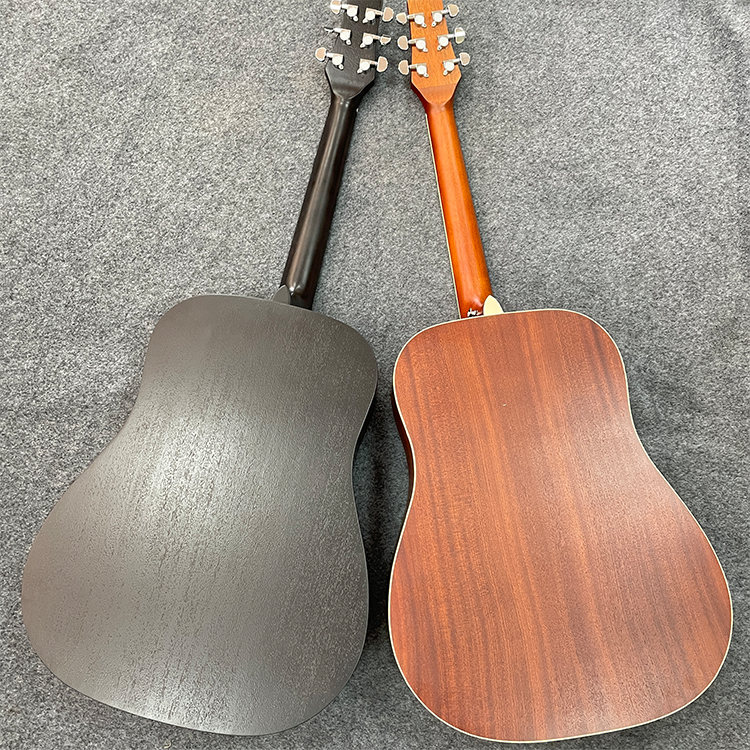
SMIGER GN-81D solid spruce top and dreadnought body detail
A useful incoming inspection does not need to be complicated. It should be consistent. Retailers and distributors can build a short routine around appearance, structure, playability and documentation.
Start by confirming the carton label, model number and instrument finish. Compare the instrument with the order record before removing protective materials. If a store carries several similar acoustic models, this simple step prevents inventory and listing errors later.
Next, inspect the body under normal light. Look at the top, back, sides, binding and the area around the bridge. The bridge should sit flat against the top. The finish should be even, and the binding joints should be clean. Small differences in wood grain are expected; cracks, loose joints and unusual lifting are not.
Check the neck from the headstock toward the bridge. A slight amount of relief can be normal, but the neck should not appear twisted. Run a hand along both fretboard edges and check for sharp fret ends. Play every fret on every string using a normal touch, listening for dead notes or persistent buzzing.
Turn each die-cast tuning machine through a small range. The movement should feel even rather than alternating between loose and tight. Tune the guitar, play several firm chords and check the tuning again after the strings have settled.
Finally, record issues by model and type. A short, repeatable record is more useful than general comments such as “quality problem.” Clear notes—high action, sharp fret end, finish mark or unstable tuner—make communication faster and help the retailer decide whether the instrument needs setup, replacement or further review.
The most convincing sales presentation begins with the customer’s use, not a list of adjectives. Staff can ask three questions: What size guitar are you comfortable holding? Do you mainly strum, sing, or play individual notes? Are you moving up from a basic acoustic guitar?
If the customer wants a full-size body and a clear upgrade from a laminated-top model, the GN-81D becomes easy to introduce. Staff can point out the solid spruce top, explain that the back and sides are sapele, and invite the customer to compare soft and firm playing.
Avoid promising that one wood automatically creates a particular “premium” sound. Acoustic response depends on construction, strings, setup and the individual player. A direct comparison in the store is more credible than a long speech.
The wording used online should follow the same approach. A clean product title might read: “SMIGER GN-81D 41-Inch Solid Spruce Top Acoustic Guitar.” The first paragraph should identify the size, top, back and sides, and the type of customer the model suits. This is clearer for search engines, AI-assisted product research and human buyers than repeating words such as “best,” “top quality” or “professional” without evidence.
Retailers can improve the GN-81D listing with a front image, a body detail, a back or side view, and a close photograph of the headstock and tuning machines. ALT text should describe the visible view and include the model naturally. It should not be a second sales headline.
A comparison block can also help. Place the GN-81D beside one laminated-top model and one higher-level acoustic guitar. Compare only facts that are confirmed: body size, top construction, back and side material, electronics if present, finish options and included accessories. If a feature is not confirmed, leave it out rather than copying it from a similar model.
The product page should link to the acoustic-guitar category, a relevant comparison guide and the contact page. For B2B enquiries, the call to action should invite the buyer to request the current product specification, finish availability, commercial terms and shipping information. It should not imitate a consumer checkout message if the website is built around trade enquiries.
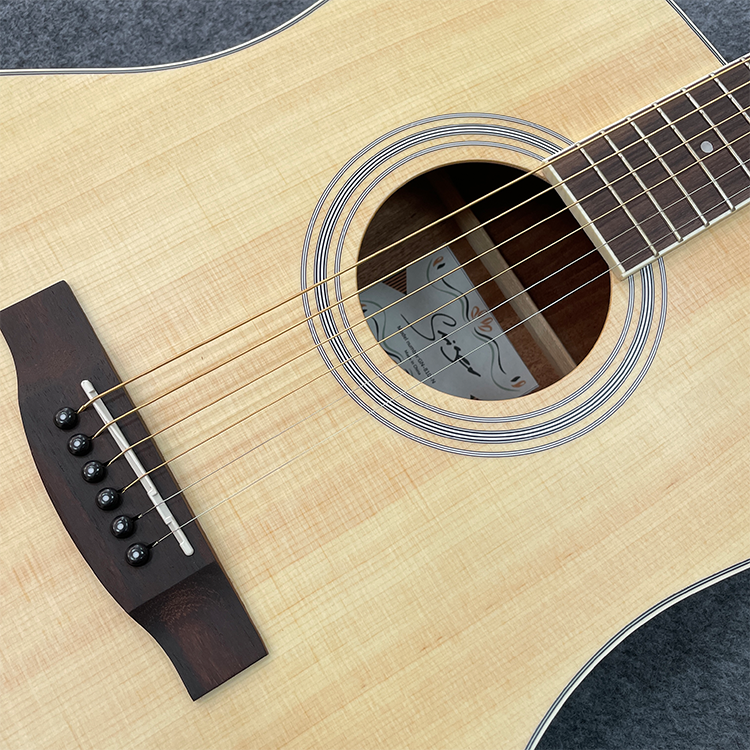
SMIGER GN-81D acoustic guitar finish and body detail
No. The published specification identifies a solid spruce top with sapele back and sides. The accurate description is “solid-top acoustic guitar.”
It is relevant to customers looking for a full-size acoustic guitar, students moving beyond a basic model, singer-guitarists and regular rhythm players who want a solid spruce top.
Describe it as a full-size acoustic format and let customers compare its playing position with a smaller body. Avoid claiming that one size is comfortable for everyone.
Confirm the model and finish, inspect the body and bridge, check neck alignment and fret condition, test the tuning machines, and play every fret on every string. Record any issue precisely.
Confirm the current specification, available finishes, packaging, included accessories, commercial terms and shipping arrangements. These details can change and should be checked against the current quotation rather than assumed from an older listing.
The GN-81D does not need exaggerated claims to earn a place in an acoustic range. Its commercial value is easier to understand when the specification is presented accurately: SMIGER branding, a 41-inch body, solid spruce top, sapele back and sides, mahogany neck and die-cast tuning machines.
For distributors and retailers, the decision comes down to range position, local customer demand, incoming inspection and the quality of the product information used by the sales team. When those points are clear, the model is easier to compare, stock and explain.
View the SMIGER GN-81D product page for the current published specification. Trade buyers can contact Vines Music, email info@vinesmusic.com, or send a WhatsApp message to +86 13826092986 to confirm availability and commercial details.