
English
Views: 0 Author: Vines Music Editorial Team Publish Time: 2026-10-09 Origin: Site


Quick answer: a P90 is a single-coil pickup format with its own housing and construction, while a humbucker uses two coils arranged to reduce mains hum. Neither format is automatically louder, warmer, clearer or better. Output, frequency response, noise, controls and playing response depend on the complete pickup design, position, wiring, instrument, setup and signal chain.
For retailers and distributors, the useful decision is not a tone slogan. It is whether the exact P90 or humbucker model serves a clear customer mission, can be demonstrated fairly, has verified product data and fits the store's support capacity. This guide provides a model-level process for range planning, sample approval, content and stock review.
P90 normally describes a single-coil pickup family with a wider, shorter coil than many traditional narrow single-coil designs. Exact magnets, winding, cover, pole pieces and mounting vary. A humbucker normally combines two coils with opposite electrical and magnetic relationships so common interference is reduced. Coil geometry, magnets, covers and wiring also vary widely.
These construction labels do not specify output, resonance, noise level or genre. Some P90 designs are strong and mid-focused; others are more open. Some humbuckers are moderate and clear; others are higher-output. Retail copy should state the verified format and controls, then describe an exact demonstration under named conditions.

The current JM-Ember listing provides a real P90-equipped reference. Buyers should confirm the current pickup, switching and control record before publication or ordering.
A fair comparison keeps separate fields for body, neck, scale, frets, bridge, pickup positions, controls, finish and included items. The current Vines Music category record identifies JM-Ember with P90 pickups, while the S-G63-6 product record identifies an H-H Alnico V layout. They also differ in body design, bridge system and other construction, so they are assortment examples rather than a laboratory pickup test.
Ask for the latest approved specification and a clear control map. Record whether the exact product uses two P90s, two humbuckers or another combination; how the selector works; whether any split, series, parallel or phase option is actually provided; and which settings need power. Never infer a switching feature from appearance.
Decision area | P90-equipped model | Humbucker-equipped model | Evidence to retain |
|---|---|---|---|
Pickup record | Exact P90 type, positions and controls | Exact humbucker type, positions and controls | Approved specification and control map |
Noise check | Observe single-coil noise in a known environment | Confirm hum reduction and any remaining system noise | Named cable, amplifier, settings and room |
Customer mission | Does the player want this response and format? | Does hum reduction or the exact response support the use? | Qualified enquiry and demonstration notes |
Service | Mounting, height and wiring procedure | Mounting, height, wiring and optional switching | Model-specific service guidance |
Commercial role | Core option, comparison option or specialist line | Core option, comparison option or specialist line | Tier, stock depth, setup time and review date |
Ask where the guitar will be played, which signal chain is used, what the customer already owns and which problem the new instrument must solve. A player may value a direct control layout, lower noise in a high-gain chain, a particular response to picking, or simply a different comparison option. Translate the answer into observable requirements.
A genre label is not enough. Two players in the same genre may prefer different pickups and settings. A studio user may care about electrical noise in a specific room, while a school or rental operator may prioritize simple handover. Use the mission to narrow a shortlist and let the exact products be tested.
Use the same known cable, amplifier, speaker, volume reference, effects state and short phrases. Begin with clean or moderate-gain settings that reveal operation, then add the customer's intended gain when appropriate. Keep pickup position and control settings visible. Level-match by ear and measurement method used by the store; louder should not win by default.
Test each selector position and control through its useful travel. Note audible noise with hands on and off the strings, but first rule out damaged cables, power problems, lighting and poor grounding in the environment. Hum reduction does not mean silence, and a P90 should not be rejected because a faulty demonstration chain adds noise.
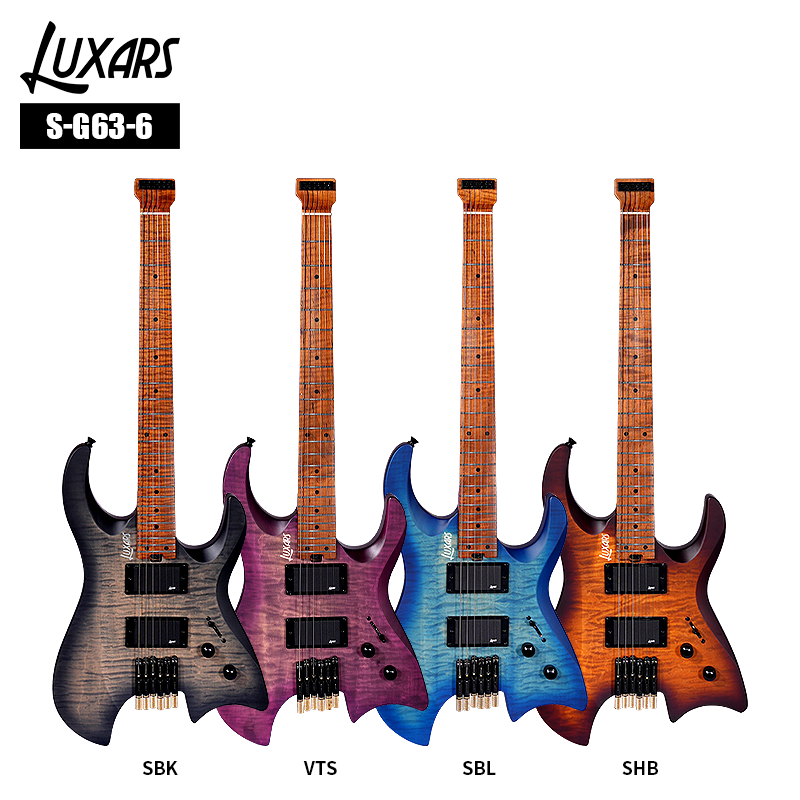
The S-G63-6 is a current humbucker-layout reference; string count, bridge and headless construction remain separate decision fields.
Pickup height, string type and distance from the strings can change perceived balance and output. Bridge construction, scale, setup, pick, amplifier and player attack also affect the result. Do not attribute every difference between two complete guitars to P90 versus humbucker construction.
For a pickup-focused review, first verify both instruments are playable and correctly set up. Use repeatable phrases and record all relevant settings. Report observations as observations: for example, which sample produced more audible hum in the stated room or which setting a customer preferred. Avoid universal claims about warmth, clarity, sustain or professional quality.
Confirm model code, finish, pickup count and position, covers or bobbins, selector, controls, output jack, bridge and included items. Operate every setting through a known signal path. Check for intermittent output, scratchy controls, unexpected volume changes and mechanical contact. Photograph the complete guitar and pickup/control area.
If a feature differs from the written record, hold the listing until the discrepancy is resolved. Sample approval should identify which version the photographs and dealer data represent. A visually similar guitar is not proof that the circuit or pickups are identical.
Put the pickup format in a structured specification field and explain the positions and switching in plain English. Add verified body, neck, fingerboard, fret, bridge, finish and included-item information. Use the exact model name in image alt text and show the pickup and control area clearly.
Link the page to the HSS, SSS and HH range guide, the bridge selection guide and the relevant product category. This lets buyers separate pickup type from pickup count and bridge choice.
Send Vines Music your country, customer groups, pickup and switching requirements, bridge preferences, price tiers, quantities and support needs. We can organize a current SMIGER or LUXARS model discussion around verified product records.
Staff can explain that a humbucker is designed to reduce common electromagnetic hum, while a traditional P90 remains a single-coil format. They should also explain that cables, power, gain, pedals, lighting and room conditions affect the result. “Noise-cancelling” should not be used as a promise of silent operation unless the exact system and claim are supported.
Give staff a short diagnostic sequence: confirm the known cable and amp, reduce gain, test selector positions, move away from interference sources, compare another verified instrument and record the conditions. Route persistent product faults to a qualified technician.
A store does not need to treat the formats as rivals. One P90-equipped model can give customers a distinct comparison beside familiar humbucker guitars. A humbucker model can provide a defined lower-noise or different-response role. The mix should reflect qualified demand, price tiers, visual variety and support workload.
Start with controlled depth. Track which customers complete a comparison, which feature influenced the decision, how long the demonstration takes and which questions recur. Do not order equal quantities simply because two pickup families exist.
Metric | What to record | Interpretation question | Possible action |
|---|---|---|---|
Qualified demand | Use, signal chain, pickup request and budget tier | Is the request specific and repeatable? | Maintain test depth or expand |
Demonstration | Models, settings, questions and result | Can staff show the difference consistently? | Improve training or content |
Conversion | Selected model and stated reason | Did pickup format or another feature decide? | Reposition the range |
Service | Noise cases, setup time and outcomes | Is the issue product, environment or handover? | Correct process or escalate |
Inventory | Sell-through, age and replenishment | Does each format earn its range role? | Deepen, reduce or retest |
At receiving, match carton, model, finish and pickup layout to the order. Inspect visible condition and a defined sample of selector, controls and output. Record exceptions by unit and shipment. Do not adjust pickup height or wiring casually to hide a repeatable problem.
At handover, show the selector and controls, identify any model-specific switching and state the support route. Keep an approved product-data version for dealers. When a circuit or component changes, update affected images, specifications, staff cards and online pages.
During week one, verify product records, display cards and staff scripts. In week two, collect completed comparison notes. In week three, review noise questions, setup work and content gaps. At day 30, compare demand, conversion, preparation time, stock age and unresolved issues.
Choose one next action for each model: maintain, deepen, reduce, improve content, improve demonstration or request clarification. Assign an owner and review date. A short evidence cycle is more reliable than repeating pickup myths.
Purchase cost and selling price are only part of the decision. Record receiving inspection, setup, demonstration, staff training, product-content work, warranty handling and inventory time. Compare those costs with gross margin, repeat demand and the value of a clear comparison role. A specialist P90 model can justify modest stock when it creates qualified conversations and acceptable contribution; a familiar humbucker model can still underperform if its data or support is weak.
Use the same calculation period for both formats. Separate one-time launch work from recurring unit work, and do not treat every contact as a sale. Review returns by stated reason and verify whether the issue came from the pickup expectation, another specification, setup or the signal chain. Share repeated product findings with Vines Music using model, date, condition and evidence.
Dealer feedback should also improve the next content version. If customers repeatedly ask whether a P90 is a humbucker, add a clearer definition. If they confuse coil switching with pickup type, add a control diagram. If noise questions arise only in one display position, investigate the environment before changing the range. This loop connects search content, sales practice, service records and purchasing.

Multiple real product views help buyers verify the exact finish and pickup layout rather than relying on a generic pickup diagram.
Yes, traditional P90 designs are single-coil pickups. Exact construction, magnets, winding, cover and mounting vary, so buyers should verify the model record.
Humbuckers are designed to reduce common hum, but the complete guitar, wiring, gain, cable, power and room affect audible noise. Compare exact products through a known chain.
Neither is universally better. Give each a customer mission and review qualified demand, demonstration results, support load, stock turn and contribution.
It can inform a comparison, but it cannot guarantee tone. Pickup design, position, height, controls, strings, guitar, amplifier and player all contribute.
Publish the verified pickup format, position, controls and switching, plus complete model specifications, real images and a support route. Avoid unverified genre and quality claims.
P90 and humbucker describe useful construction families, but they do not replace a model-level decision. Retailers should verify the circuit, demonstrate through a known chain, inspect the sample and measure the role each product plays.
This approach gives customers a clearer choice and gives buyers defensible data for assortment, content and support.
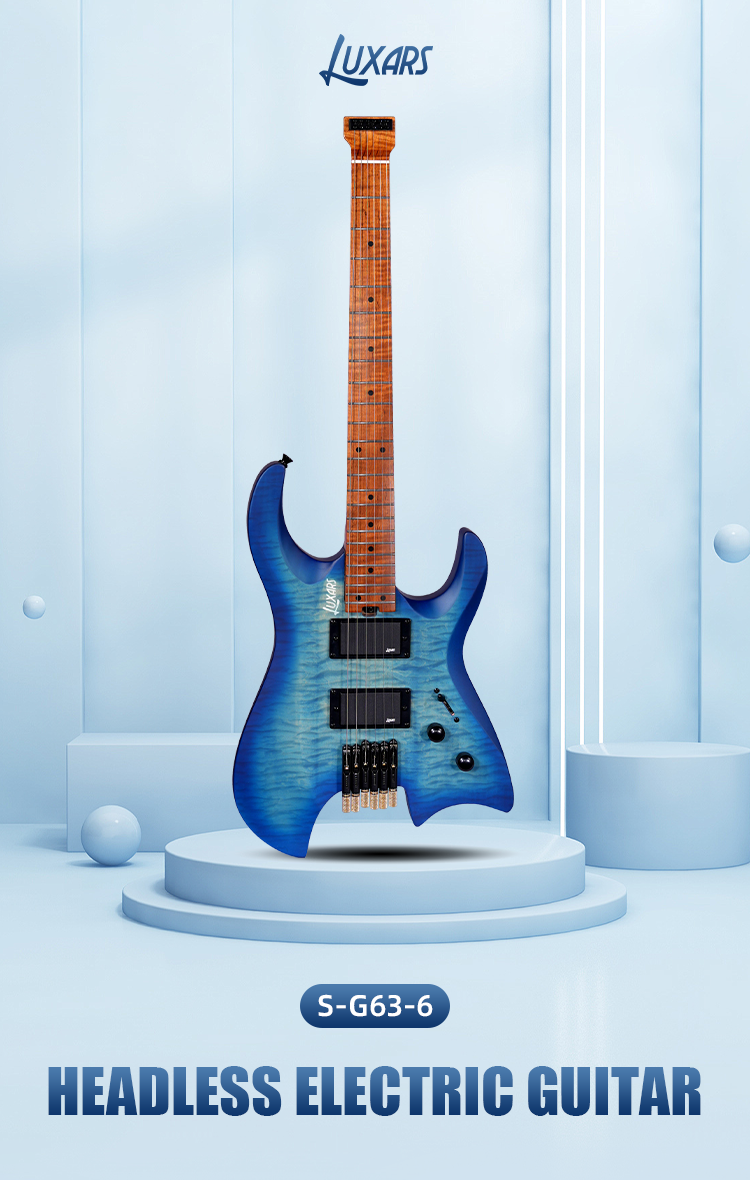
Detail imagery supports identification; the approved current specification remains the source of truth.
Tell Vines Music which pickup formats, switching functions, customer missions and order quantities you are reviewing. We can discuss relevant current product records.