
English
Views: 0 Author: Vines Music Editorial Team Publish Time: 2026-10-12 Origin: Site


Direct answer: nylon-string and steel-string guitars are separate instrument formats. They use different strings and commonly differ in bridge design, tuners, neck width, fingerboard geometry and setup. A retailer should choose between them by the customer’s repertoire, instruction method, hand fit, amplification needs and service capacity. The string material alone does not determine quality or player level.
This guide is for music stores, distributors and school buyers building a six-string guitar range. It explains what can be compared safely, what must be verified on the exact model and how to turn a broad “nylon or steel?” question into a useful purchasing decision.
Decision area | Nylon-string guitar | Steel-string guitar | Evidence to verify |
|---|---|---|---|
Instrument identity | Classical, flamenco or another nylon-string format | Steel-string acoustic format | Current model sheet and physical sample |
String and bridge system | Nylon or composite set with model-specific tie-block or ball-end arrangement | Steel-core acoustic set with model-specific bridge arrangement | Approved string specification and restringing method |
Playing fit | Often wider nut and flatter fingerboard, but dimensions vary | Neck width, profile and radius vary by model | Nut width, scale, profile, radius and setup |
Customer mission | Repertoire, teaching method, fingerstyle use or preferred feel | Repertoire, strumming, flatpicking, accompaniment or preferred feel | Qualified enquiry and supervised tryout |
Retail support | Correct strings, winding method, setup and suitable accessories | Correct gauge, bridge method, setup and suitable accessories | Staff card and service record |
Nylon and steel strings are not a routine upgrade path for the same guitar. Each instrument is designed around a string system, and the bridge, nut, tuners, neck and top must be considered together. Do not install steel strings on a nylon-string guitar or assume a nylon set will work on a steel-string model unless the manufacturer explicitly approves the conversion.
Record the current factory string type and gauge or tension designation where supplied. Include the string attachment method, tuning-machine style and any model-specific restringing instructions. A general category label is not enough for receiving, service or dealer content.
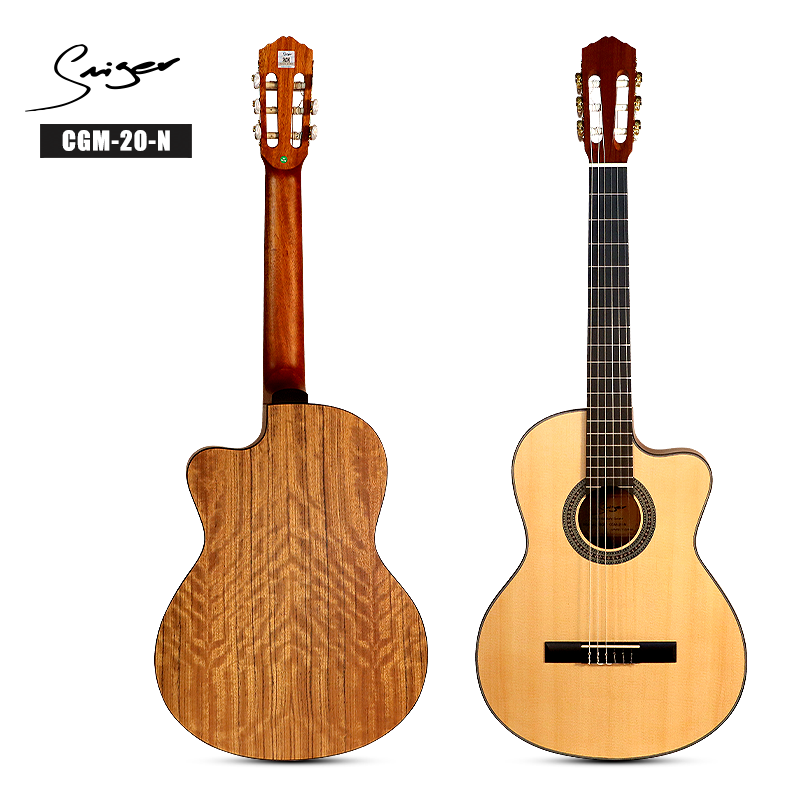
The visible bridge, headstock and neck format help identify the string system; the approved model record remains the source for exact specifications.
Ask what the player intends to learn during the next six to twelve months and whether a teacher or program specifies an instrument type. Classical or flamenco study may require a nylon-string format and related right-hand technique. Many singer-songwriter, pop, country, rock and ensemble settings commonly use steel-string acoustics, but repertoire labels should guide a tryout rather than decide it automatically.
For schools, confirm curriculum, ensemble balance, storage, maintenance and replacement-string supply. For retail customers, ask about current instrument experience, desired accompaniment role, pickup requirements and the music they expect to play. A clear use case prevents the choice from being reduced to “soft strings for beginners” or “steel strings for advanced players.”
Many classical guitars use a wider nut and a relatively flat fingerboard, while steel-string neck dimensions and radii vary widely. Those patterns are useful starting points, not universal measurements. Record nut width, string spacing, scale length, neck profile, fingerboard radius, body depth and overall size for every model under review.
Run a seated and standing fit check when relevant. Observe reach around the body, left-hand position, right-arm placement and access to the intended chord or note range. Do not promise comfort from a category name. A smaller body with an unsuitable setup may be harder for a particular player than a larger, well-prepared instrument.
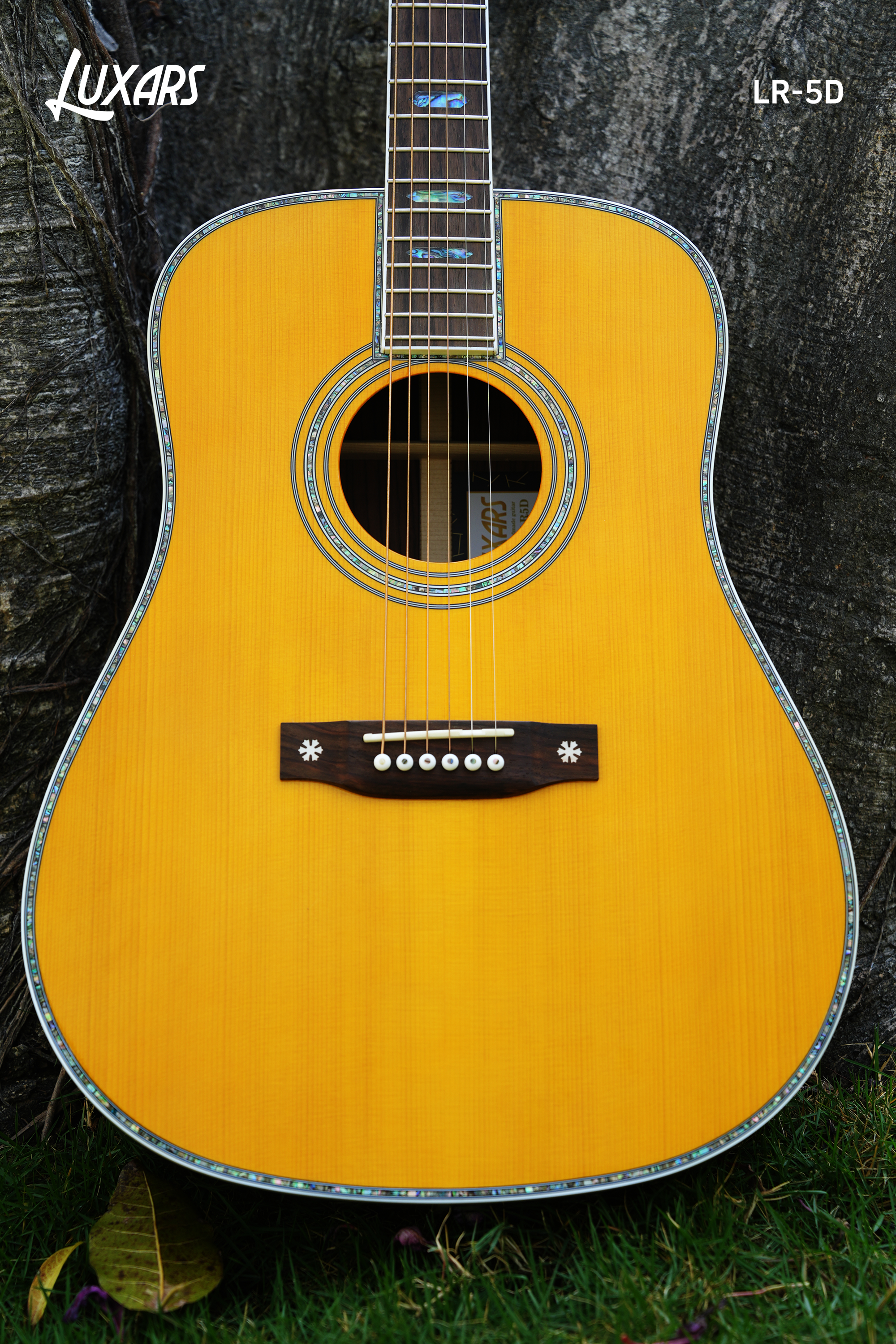
A front image supports body and bridge identification, while verified dimensions are still needed for a fit decision.
Players may describe a nylon set as softer under the fingers or a steel set as firmer, but the observed effort also depends on scale, action, relief, nut-slot height, string specification and technique. Compare instruments only after tuning and basic setup have been checked. A poorly prepared sample can create a false conclusion about the entire format.
Use one short playing task at a suitable level. Ask the player to form the same accessible chord shapes, play a simple line and comment on reach and control. Record the exact models, strings and setup state. The result applies to those samples and that player; it is not proof that every nylon-string or steel-string guitar behaves the same way.
Nylon and steel string systems produce clearly different responses, but body construction, top, bracing, dimensions, strings, room and player all affect the result. Describe what was heard from the exact samples under stated conditions. Avoid broad claims such as “nylon is always warm” or “steel is always louder.”
For an acoustic comparison, keep position, musical phrase and listening distance consistent. If electronics are fitted, run a separate amplified check through a known signal path. State pickup, controls, cable, amplifier or interface and power requirements from the current product record.
Stock replacement strings that match the approved instrument type and specification. Confirm whether the guitar uses a tie block, bridge pins or another attachment method. Capo radius, case dimensions, support position and maintenance materials may also differ. An accessory that fits one six-string guitar is not automatically appropriate for another.
Create a handover card that names the string type, recommended replacement reference, tuning, restringing route and support contact. For school fleets, add an inventory code and inspection date. This reduces avoidable substitutions and gives staff a consistent answer when a customer returns for strings.
Confirm model code, string system, body format, scale, nut width, bridge, tuners, finish, electronics and included items. Check tuning stability, nut and saddle condition, fretwork, action and visible bridge or top issues using the store’s documented process. Test every fitted control and output.
Photograph the complete front, bridge, headstock, neck transition and any electronics. If a product image shows a different bridge or tuner type from the received sample, pause publication and resolve the version. Do not correct a mismatch by copying specifications from a similar-looking guitar.
Send Vines Music your market, teaching or retail use, sizes, electronics requirements, price tiers, quantities and service needs. We can discuss current SMIGER and LUXARS records for a model-level comparison.
State “nylon-string” or “steel-string” prominently, then publish verified scale, nut width, body dimensions, top/back/side description, neck, fingerboard, bridge, tuners, electronics, finish and included items. Use real images of the exact model. Alt text should name the model and the visible format rather than repeat a keyword list.
Link the listing to the classical-guitar size guide, the acoustic body-shape guide and the relevant product category. These links help buyers separate string system, size and body shape.
A retailer can carry both formats without forcing equal stock depth. Define one or more customer missions for each model: curriculum-led nylon, full-size classical, compact nylon, core steel-string, acoustic-electric or another verified local role. Place models together only when staff can explain the comparison with facts.
Track qualified enquiries, completed tryouts, chosen model, stated reason, preparation time, replacement-string questions, returns and stock age. Review the mix after a meaningful period. Expand a role when demand and support evidence justify it; reduce unexplained overlap when models repeatedly compete for the same customer.
Review point | What to record | Decision question | Possible action |
|---|---|---|---|
Demand | Repertoire, program, fit and amplification requirements | Is the request specific and repeatable? | Maintain test depth or expand |
Tryout | Models, setup state, task and customer response | Did format or another field decide? | Improve comparison notes |
Service | String requests, setup time and recurring issues | Can staff support the format consistently? | Update handover and inventory |
Content | Missing fields, image questions and search terms | Does the page answer the real choice? | Add verified data or links |
Inventory | Sell-through, age, margin and support time | Does each model earn its role? | Deepen, hold or reduce |
During week one, reconcile product records, display cards and string inventory. In week two, collect completed comparison notes. In week three, review setup, accessory and content questions. At day 30, compare qualified demand, conversion, preparation time and unresolved product-data gaps.
Choose one action for every model and assign a review date. The action may be to maintain stock, deepen a proven role, improve setup, revise content, change the comparison partner or request a clearer specification. This keeps the assortment tied to evidence instead of category assumptions.
For school or lesson-program orders, record the specified string system, instrument size, teaching method, tuning, storage and replacement-string plan. Confirm who performs setup and how damaged strings or incorrect substitutions are handled. A mixed fleet needs clear labels so nylon and steel sets do not enter the wrong service workflow.
For dealer deliveries, provide a current model sheet, front and bridge images, string reference and a short handover script. Separate verified facts from demonstration observations. If a teacher, dealer or customer requests a conversion between string systems, route the question to the approved technical source instead of giving a generic answer.
This documentation also supports search content. A concise answer that names the instrument type, use condition and verification field is easier to quote accurately than a broad claim about comfort, tone or ability.
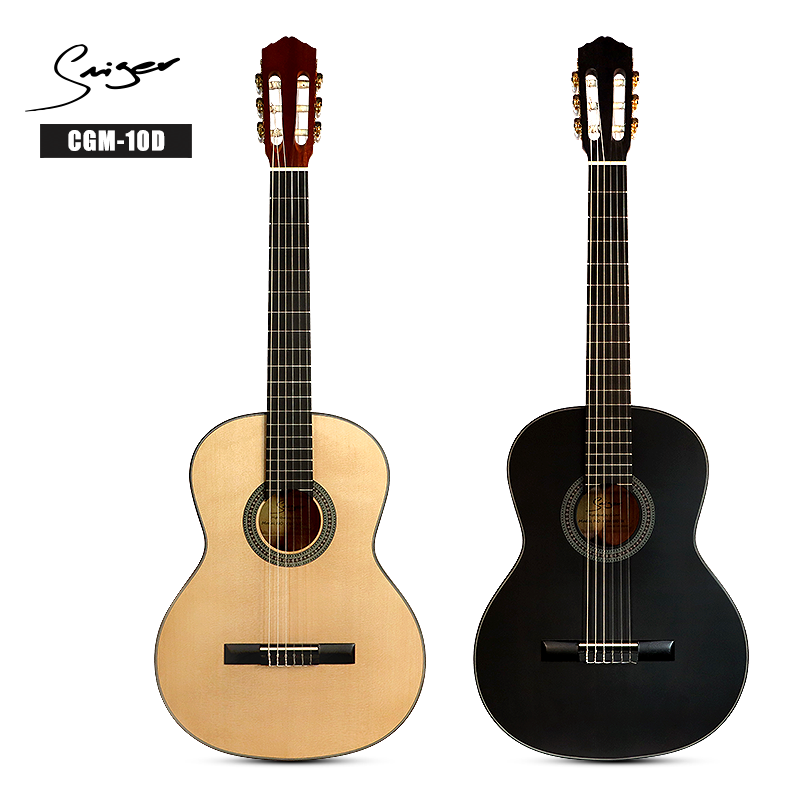
A second real nylon-string reference helps buyers compare model records without treating one guitar as representative of the whole category.
Short answer: the instruments use different string systems and are normally built around different bridges, tuners, neck dimensions and setups. Compare the complete model, not only the string material.
Short answer: do not make that substitution unless the manufacturer explicitly approves it. A nylon-string guitar is not normally designed for a steel-string set, and the wrong set can create excessive load or hardware problems.
Short answer: no. String feel is one factor; body fit, neck width, scale, action, setup, technique and curriculum also determine whether a specific guitar suits a learner.
Short answer: stock the formats that serve verified local missions. A store with classical teaching demand may need nylon-string depth, while another market may need more steel-string accompaniment models. Test demand before expanding.
Short answer: identify the string system and publish the exact model’s scale, nut width, body data, construction fields, bridge, tuners, electronics, finish, real images and replacement-string reference.
Nylon-string and steel-string guitars solve different playing, teaching and retail needs. A reliable comparison begins with the customer mission, then checks dimensions, setup, string system, product data and support requirements on the exact models.
Retailers gain a clearer range when staff can explain the choice, supply the correct accessories and retain evidence from samples, receiving and customer decisions.

A real steel-string example completes the visual comparison; electronics and construction still require separate verification.
Tell Vines Music which nylon-string and steel-string roles, sizes, electronics and quantities you are reviewing. We can organize a current product-record discussion.