
English
Views: 0 Author: Vines Music Editorial Team Publish Time: 2026-10-05 Origin: Site


Quick answer: a six-string headless electric guitar gives retailers a familiar tuning and string-count reference in a compact modern format. A seven-string version adds a lower string and a wider musical range, but it also changes the neck, string set, setup, demonstration and customer-support requirements. The seven-string model is not automatically an upgrade for every player. It should have a defined role supported by real demand and model-level inspection.
For distributors and music stores, the useful comparison is therefore broader than six versus seven strings. Buyers should verify scale information, neck dimensions, fret layout, bridge and string-locking system, pickups, controls, replacement strings, case fit, setup tolerances and the player group for the exact model. This guide provides a practical process for selecting, inspecting and merchandising both formats without unsupported claims.
A standard six-string electric guitar is commonly tuned E-A-D-G-B-E. A typical seven-string configuration adds a lower string, often tuned to B, but alternate tunings exist. Retail content should describe the delivered string count and the approved tuning or string specification rather than assuming how every player will use the instrument. The extra string expands range; it does not determine genre, skill level or product quality.
The additional string normally requires a wider neck and a bridge and locking system designed for seven strings. String spacing, nut or zero-fret arrangement, pickup width and control placement may also differ. Those factors influence physical feel and service work, so they belong in the product record. A buyer should never create the seven-string listing by copying the six-string page and changing one number.
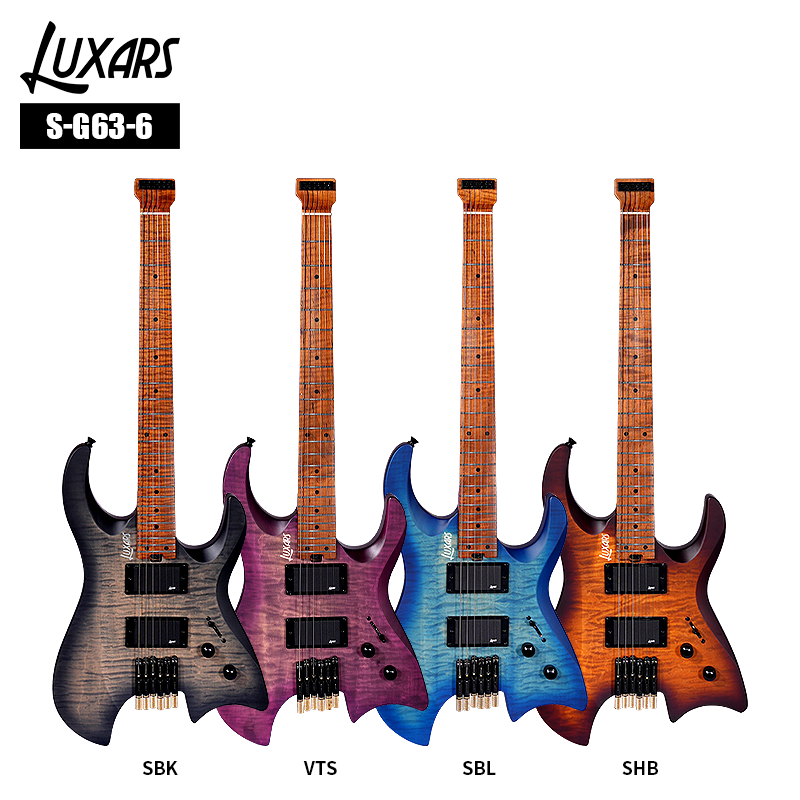
The current S-G63-6 record gives buyers a six-string reference with a headless layout, roasted maple neck and fingerboard, and H-H Alnico V pickups.
The live Vines Music records checked for this guide identify both S-G63-6 and S-G63-7 as headless electric guitars with flamed maple veneer body descriptions, roasted maple neck and fingerboard descriptions, H-H Alnico V pickups and matte finishes. The seven-string record also identifies its seven-string format and an upgraded alloy-copper bridge. These are useful starting facts, but a commercial buyer should request the current approved specification and confirm the production version before ordering or publishing dealer copy.
Keep every field separate. String count does not prove scale length, fret count, weight, neck profile, string gauge, tuning, bridge material or included accessories. Images support identification, but they do not replace written approval. If a photograph, title and specification disagree, hold the listing until the source record is corrected.
Decision area | Six-string question | Seven-string question | Evidence to retain |
|---|---|---|---|
Player mission | Does a familiar six-string format cover the intended use? | Is extended lower range a stated requirement? | Customer requests, repertoire and channel notes |
Neck and spacing | What are the current nut, neck and spacing dimensions? | How much wider is the exact seven-string version? | Approved drawing or specification and sample measurements |
Bridge and locking | Which string ends and adjustment method are used? | Is every seventh-string part and adjustment documented? | Current hardware record, tool list and service check |
Strings and tuning | Which set ships with the model? | Which seven-string set, gauge and tuning are approved? | String reference, tuning and setup baseline |
Retail role | Core modern format or compact comparison option? | Specialist range extension or proven local demand? | Price tier, stock depth and review date |
Ask what range, tuning and repertoire the customer actually needs. A player who wants a headless instrument for compact handling may still prefer six strings. A player who regularly uses lower-register parts may need seven. A school, studio or rental operation may value standardization more than extended range. These are different missions and should not be compressed into a claim that more strings mean more versatility.
Retail staff should ask which instrument the customer already uses, which tuning is required, whether the additional string appears in the intended material, and who will maintain the setup. For online buyers, provide the same decision points in the product content. This reduces returns caused by choosing a visible feature without understanding its operating requirements.
Use a small range test when local evidence is limited. One clear six-string role and one controlled seven-string role can reveal whether customers understand the difference. Record qualified enquiries and completed comparisons rather than treating clicks or casual attention as demand.
The seventh string usually adds width, but exact neck dimensions and spacing determine the result. Measure only against the approved specification and use consistent points. Ask suitable players to complete the same short task on both samples while seated and standing. Observe reach, muting demands, control access and balance without turning personal preference into a universal comfort claim.
Inspect all fret positions used in the intended setup. Play open strings, representative middle positions and the highest practical positions. Listen for buzzing, choking or inconsistent response under the same tuning and attack. Record the unit, string set, setup condition and test path so a technical finding can be repeated.
A headless layout may change how the instrument sits on a stand, fits a wall hanger or uses a case. Confirm physical compatibility instead of assuming that a shorter overall outline will fit every existing display or transport accessory.
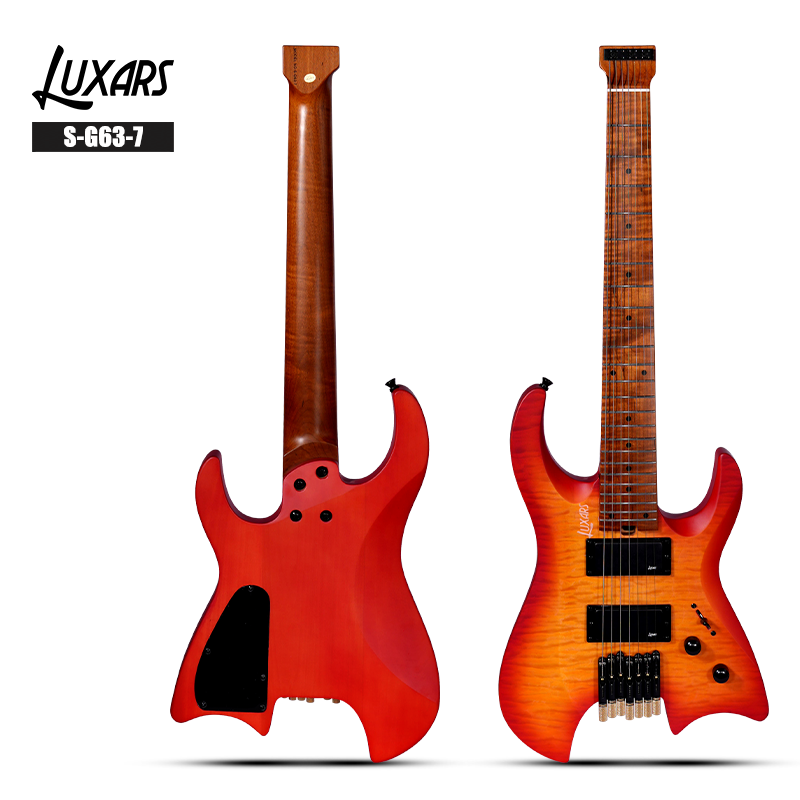
The S-G63-7 provides a current seven-string reference; buyers should verify the exact neck, bridge, string and setup fields for the production version.
Headless guitars move tuning and anchoring functions away from a conventional headstock arrangement. The exact system determines how strings are installed, tuned and adjusted. Staff and technicians need the correct string route, adjustment tools, safe travel limits and replacement-part reference for the model. A general headless-guitar video is not a substitute for the approved model procedure.
During sample review, operate every tuner through a controlled range, confirm that the string seats correctly and check that adjustments remain accessible. Inspect the bridge, locking points and visible fasteners. Do not force a component that feels restricted. Document the condition and ask for model-specific guidance.
For the seven-string version, confirm that the additional hardware position follows the same documented service process. Replacement bridges, locks or saddles should be identified by exact model and version. The inventory plan should include only parts that the supplier has confirmed as compatible.
Six- and seven-string sets are separate inventory items. The retailer should record the delivered gauge and current tuning, then confirm which replacement sets can be used without changing the approved setup. A different gauge or alternate tuning may require adjustments. Staff should explain that relationship without promising that one setup suits every player.
Create a handover card with the model, string count, tuning at delivery, string reference, bridge procedure, supplied tools and support contact. For a seven-string instrument, add the exact low-string reference. This simple record helps the customer, technician and next staff member work from the same baseline.
Count setup and training time when evaluating margin. A specialist model may justify its place even at lower volume, but the business should understand the full service requirement. Unit price alone does not show the contribution of a product that needs additional preparation or explanation.
Use the same cable, amplifier, speaker, effects state, volume and short musical phrase where the formats allow. Demonstrate the shared six strings first, then add a lower-register phrase on the seventh string. Explain what changed. Avoid turning gain, volume or EQ into a hidden advantage for one model.
Separate string-count observations from pickup and bridge observations. Both current S-G63 records identify H-H Alnico V pickup layouts, but exact output and response still depend on the complete instrument and setup. Describe what is heard under the stated test rather than claiming that all seven-string guitars are heavier, tighter or more powerful.
Let the customer repeat the comparison. The staff member should verify operation and explain product facts; the customer determines whether the additional range and physical format suit the intended use.
Send Vines Music your market, customer groups, tunings, preferred specifications, target price tiers, quantities and support requirements. We can discuss current SMIGER and LUXARS model records and identify the fields that need confirmation before selection.
Product pages should state string count in the title, specification table and filter data. Add verified scale, fret, neck, pickup, bridge, finish and included-item fields. Use images of the exact version, including a front view and relevant close-ups. Alt text should describe the model and visible feature rather than repeat promotional claims.
Place the products in a comparison path that answers the next question. Link to the current headless-guitar category, the electric-guitar pickup layout guide and the bridge selection guide. This lets buyers separate string count from pickup and bridge decisions.
Avoid genre guarantees and level labels such as 鈥減rofessional only.鈥� A seven-string model can be appropriate for a buyer with a clear need, while an experienced player may prefer six. Explain the configuration, the comparison process and the support path.
Confirm model code, string count, finish, bridge, locking system, pickups, controls, fret condition, output and included items. Record the string set and tuning used for approval. Photograph the complete instrument and any version-specific detail. A sample becomes useful only when the buyer and supplier agree which attributes it represents.
At receiving, match cartons, labels and instruments to the approved record. Count strings and confirm the correct bridge and hardware version. Inspect visible condition and a defined functional sample. If a six-string and seven-string carton can look similar, add a warehouse check that prevents the models from entering the wrong stock record.
Keep exceptions factual: unit, carton, model, date, symptom and evidence. This supports a corrective action without claiming that one configuration is generally more reliable.
Review point | Metric | Interpretation question | Possible action |
|---|---|---|---|
Qualified demand | Requests that include tuning, range or model needs | Is the seven-string request specific or casual? | Maintain a test quantity or increase depth |
Demonstration | Completed comparisons and common questions | Can staff explain the difference clearly? | Improve training or product content |
Conversion | Selection by customer mission and price tier | Which role led to the decision? | Reposition models or adjust the comparison |
Operations | Setup minutes, string needs and service cases | Does the contribution cover support work? | Change preparation, stock or pricing review |
Inventory | Age, sell-through and reorder time | Is depth aligned with repeatable demand? | Rebalance six- and seven-string quantities |
Do not begin with equal quantities simply because there are two formats. A six-string model may serve the core assortment, while the seven-string model provides a smaller specialist role. Another market may have stronger extended-range demand. Use a defined test period and comparable records.
In days 1鈥�7, verify that product records, images, display cards and staff notes agree. In days 8鈥�14, capture qualified customer questions and complete controlled demonstrations. In days 15鈥�21, review string, setup and service records. At day 30, compare enquiries, conversions, inventory age, preparation time and unresolved issues.
Choose one next action for each model: maintain, deepen, reduce, improve content, improve training or request a product clarification. Record the owner and review date. A short evidence cycle is more reliable than ordering deeply from a visual trend.
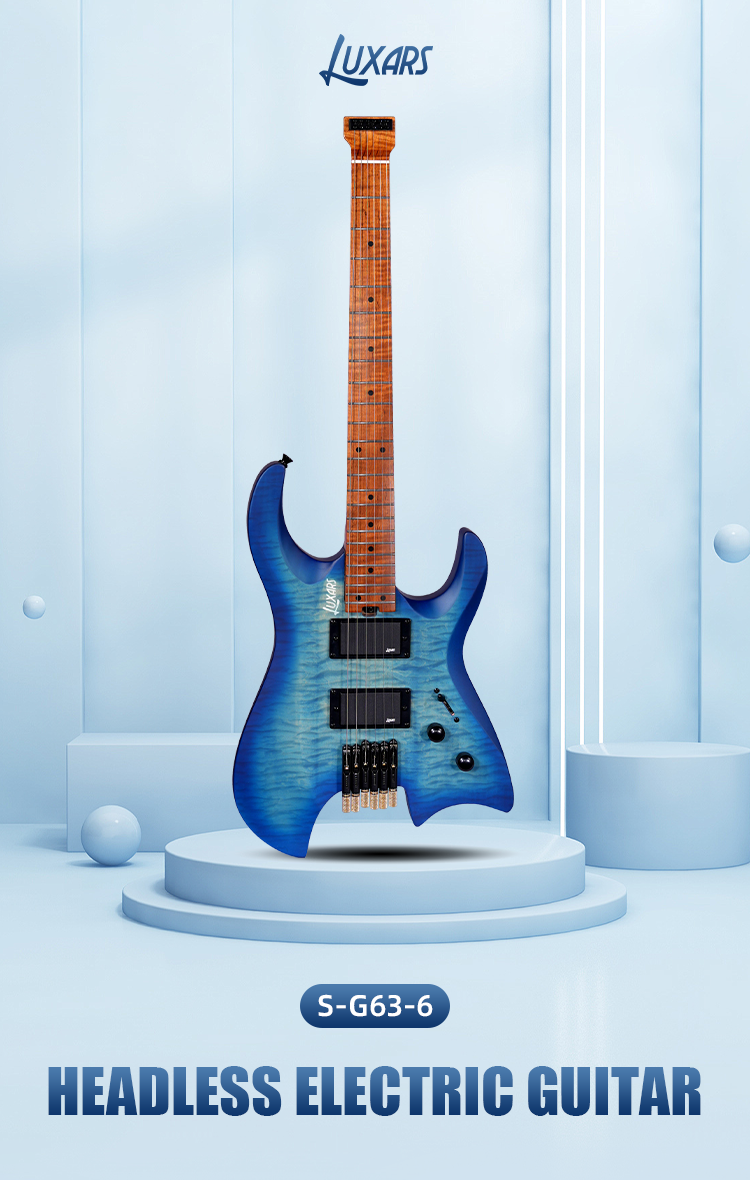
Detail imagery supports version and feature checks, while the current approved specification remains the source of truth.
The seven-string format adds another string, usually extending the lower range. It also requires a matching neck, bridge, locking system, pickups or sensing width, string set and setup. Exact tuning and specifications must be checked by model.
Not automatically. Suitability depends on the music, tuning, physical preference and support needs. Player level alone does not determine the correct string count.
No complete set is interchangeable because the string counts differ. Confirm the delivered gauges, approved tuning and compatible replacement set for each exact model before changing the setup.
Verify identity, string count, neck and fret condition, bridge and locking operation, tuning range, pickups, controls, output, finish, included tools and the current specification. Keep a dated baseline.
Start with customer missions and a controlled quantity. Review qualified enquiries, completed comparisons, sell-through, setup time, service questions and inventory age before increasing either format.
Six strings provide a familiar electric-guitar reference in a headless format. Seven strings extend the range and create different neck, string, bridge and support requirements. Neither format is a universal quality grade.
Retail buyers should compare current records, approve samples, train staff and review real channel evidence. That process gives customers a clearer answer and gives the business a defensible stock decision.

Confirm the exact seven-string bridge, neck, string and setup information before dealer publication or ordering.
Tell Vines Music which string counts, tunings, customer groups, price tiers and order quantities you are reviewing. We can organize a model-level discussion using current product information.