
English
Views: 0 Author: Vines Music Editorial Team Publish Time: 2026-09-30 Origin: Site


Quick answer: a 22-fret electric guitar usually covers the range most players expect from a conventional six-string instrument, while a 24-fret guitar adds two semitones at the top of every string and gives the highest string a complete second octave. Retail buyers should not treat the fret count as a quality grade. Compare upper-fret access, scale length, neck joint, pickup position, bridge, setup, player group and actual product role before deciding how many units of each configuration belong in the range.
For a music store, distributor or education buyer, the practical question is not whether 22 or 24 frets are universally better. It is which configuration matches the players, demonstrations, repertoire and price tiers that the business intends to serve. This guide turns that question into a repeatable buying, receiving and merchandising process.
Each fret raises a note by one semitone. A 24-fret fingerboard therefore extends two semitones beyond a 22-fret fingerboard. On the highest string in standard tuning, the 24th fret reaches E, two octaves above the open string. The complete octave above the 12th fret can serve players who use the high register. That is a range difference, not evidence that every customer needs the extra notes.
Fret count does not automatically determine scale length. A 22-fret and a 24-fret guitar can share the same scale length, because scale length is measured from the nut to the bridge. The additional frets are accommodated through the fingerboard, neck joint and body layout. Retail copy should therefore list fret count and scale length as separate fields. Do not infer one from the other.
On many 24-fret layouts, the neck pickup sits closer to the bridge because the fingerboard occupies more space. That can change the pickup’s sensing position, but the audible result also depends on pickup design, height, strings, electronics, amplifier and playing method. A retailer should demonstrate the exact instruments under controlled settings rather than promising a universal tonal difference from fret count alone.
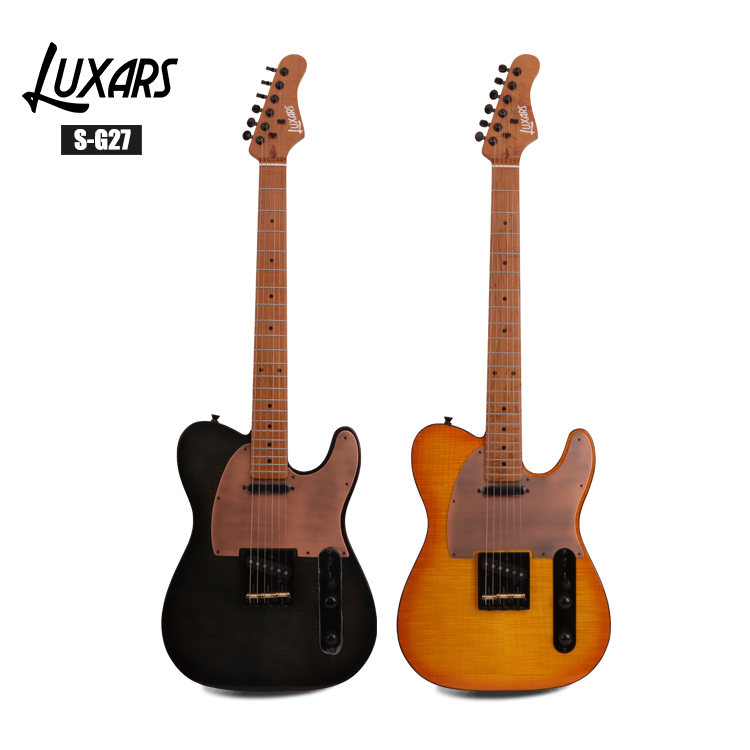
A verified 22-fret model gives buyers a concrete reference for fret count, scale, bridge and pickup layout.
A useful range comparison begins with the complete specification. Record fret count, scale length, neck construction, neck joint, body shape, bridge type, pickup layout, controls, weight where available and included accessories. Then compare the current product photographs with the written record. If an image and specification conflict, stop the item from entering dealer content until the source is corrected.
Buying question | 22-fret configuration | 24-fret configuration | What the buyer should verify |
|---|---|---|---|
Upper range | Stops two semitones earlier on each string | Adds two semitones and a second octave on the highest string | Actual repertoire, demonstration needs and upper-fret access |
Scale and feel | May use many scale lengths and neck profiles | May use the same or a different scale and profile | Published scale, nut width, neck dimensions and setup |
Neck pickup position | Often allows the pickup to sit farther from the bridge | Often moves the pickup toward the bridge | Exact body drawing, pickup location and controlled listening test |
Body and neck joint | Access depends on heel, cutaway and joint | Extra frets are useful only when the hand can reach them | Reach the 21st–24th frets on the exact model |
Retail role | Broad conventional use and familiar comparison point | Extended-range feature for customers who can use it | Customer group, price tier, stock depth and staff explanation |
The table should be applied at model level. A poorly prepared 24-fret guitar does not provide a better high-register experience than a correctly set up 22-fret guitar, and a 22-fret guitar with an accessible double cutaway may feel easier in the upper register than a 24-fret instrument with a restrictive heel. The product as a system matters more than one catalogue number.
Ask what the customer needs to play. Many rhythm, pop, blues, country, worship, school and general retail applications do not require the 23rd or 24th fret. Other lead, progressive, metal, fusion or technical parts may use the extra range. The buyer should translate this into an assortment role rather than a stereotype. “Modern player” is too broad to define inventory.
For beginners, fret count is usually less important than reliable setup, clear controls, stable tuning, suitable physical fit and a complete practice signal path. A 24-fret label can attract attention, but it should not replace the first-day checks that determine whether the instrument is ready to use. Music schools should follow the curriculum and teacher requirements instead of assuming that more frets create more learning value.
For experienced players, let the customer test a repeated phrase at the highest positions they actually use. Compare access, hand clearance, intonation, fret response and pickup settings. Keep the cable, amplifier, gain and volume stable. This produces a useful observation without converting one person’s preference into a product-wide claim.
Fret count states how many fret positions the fingerboard provides. Fret size describes the wire dimensions, while fret finishing describes the installed condition. These fields answer different questions. A product may have 24 frets but still require attention if the fret ends, level, seating or upper-register response do not meet the agreed receiving standard.
Ask the supplier to identify the current fret specification only when it is documented. Terms such as medium, jumbo or rounded end can vary in meaning between product records. Dealer-facing content should use the approved wording and a model version or date. A close-up image can support identification, but it should not be used to claim perfect finishing across a shipment.
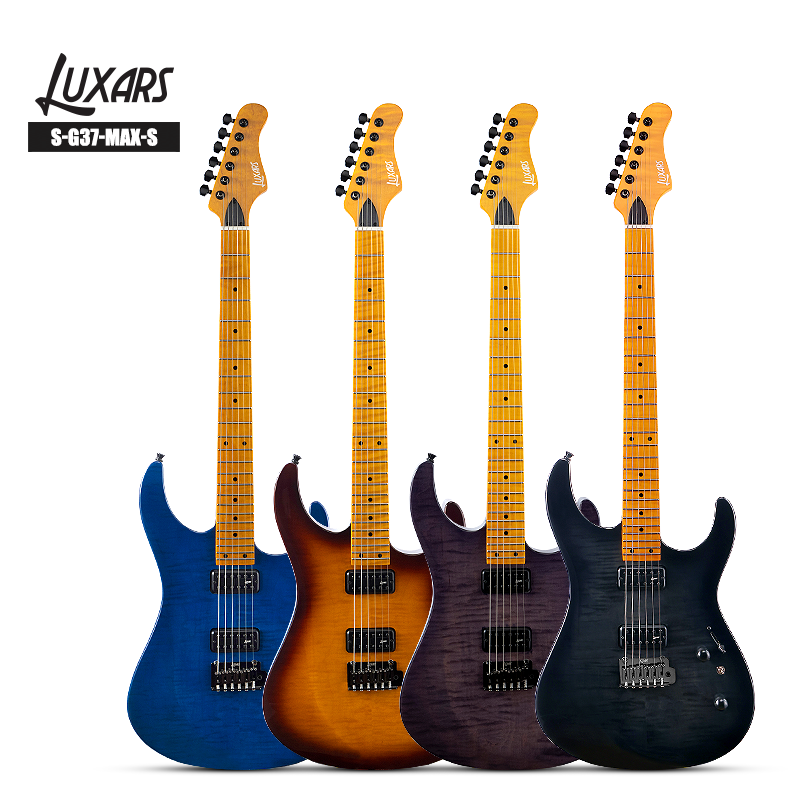
A 24-fret model should be assessed through its complete configuration, including neck access, pickups, bridge and setup.
Place the guitar in the intended seated and standing positions. Check whether a player can approach the 20th through 24th frets without an extreme hand position or contact with a restrictive heel. Observe the lower cutaway, neck joint and strap balance. The result is model-specific; the number 24 does not guarantee that every added fret is equally accessible.
Play a short chromatic sequence across the highest positions at a moderate volume. Listen for notes that choke, rattle, lose sustain unexpectedly or sound noticeably out of tune. Repeat the check with more than one suitable player or technician when possible. If the same issue appears on the same unit, route it for setup review. If it repeats across several units, record the batch and share controlled evidence with the supplier.
Do not ask staff to “fix” an instrument during the customer comparison unless that is part of an approved service process. Separate the demonstration unit, the receiving sample and the saleable stock. That makes the result traceable and avoids hiding the preparation cost.
A dealer does not need equal quantities of 22- and 24-fret guitars. Begin with customer missions and price tiers. A broad entry or traditional range may be led by 22-fret models, while a smaller 24-fret group can serve players asking for the extended register or a specific modern configuration. The mix should follow sales evidence, enquiries, returns, demonstration use and local repertoire.
Give each model a written role. Examples include “general-purpose fixed-bridge model,” “24-fret H-H model for extended-range demonstrations” or “22-fret S-S model for a traditional control layout.” Roles help buyers avoid stocking several visually different guitars that answer the same question. They also make staff training and replenishment more consistent.
Range stage | Evidence to collect | Decision | Record to retain |
|---|---|---|---|
Selection | Customer requests, repertoire, current gaps and price tier | Choose the role and shortlist exact models | Model comparison and approved product data |
Sample review | Upper-fret access, fret response, intonation, controls and balance | Accept, request clarification or revise the shortlist | Dated sample checklist, images and issue notes |
Receiving | Identity, quantity, visible condition and agreed functional checks | Release, hold or escalate each exception | Shipment and unit or carton reference |
Merchandising | Staff explanation, display location and comparison path | Place 22- and 24-fret options by customer mission | Display card and training note |
Reorder | Sell-through, qualified enquiries, returns and service time | Increase, reduce or rebalance stock | Period comparison and corrective actions |
Before a range commitment, verify the exact sample against the current specification. Count the frets, confirm the model code and inspect the neck, nut, bridge, controls, pickup layout and visible finish. Tune the guitar and check open strings, representative positions and the upper register. Photograph exceptions with enough context to identify the unit and location.
Shipment inspection should confirm that the delivered configuration matches the approved sample or agreed revision. Do not assume every carton contains the same fret count because the body shape or color is similar. Product names, cartons, labels, internal records and instrument features should agree. Any substitution requires a commercial and content decision before the units enter the retailer’s system.
Inspection language should remain factual. “No visible issue in the sampled units under the agreed check” is more useful than “perfect quality.” Record sample size, method, date and owner. When the buyer needs third-party inspection, define the checklist and acceptance process before production or dispatch rather than after a disagreement.
Send Vines Music your country, customer group, price tiers, preferred body and pickup configurations, expected quantity and required inspection fields. We can discuss current SMIGER and LUXARS model records and identify which facts need confirmation before selection.
Use a short display card with fret count, scale length, neck access, pickup layout, bridge and intended comparison task. Let customers see that fret count is one part of the configuration. Place a 22-fret and 24-fret option close enough for a controlled comparison when both serve the same price or player segment.
Train staff to answer the direct question first: 24 frets add two semitones of range. Then ask whether the customer uses those notes and compare the exact guitars. Avoid claims that 24 frets are automatically professional, faster or more versatile, or that 22 frets always sound warmer. Those conclusions ignore the rest of the design and the player’s actual use.
Connect this article with the HSS vs SSS vs HH retail range guide and the fixed bridge vs tremolo stock and service guide. Together they let a buyer compare fret count, pickups and bridge as separate decisions.
Review sell-through by model role rather than by fret count alone. A 24-fret guitar may sell because of its body, finish, pickups or price, while a 22-fret model may be chosen for a familiar format. Ask staff to record the main customer requirement and the final comparison. This prevents the business from attributing every result to the most visible feature.
Measure demonstration questions, preparation time, return reasons, service causes and replenishment speed. If customers repeatedly ask why a 24-fret model feels different, improve the product comparison. If the upper frets need repeated setup on one unit or batch, route the technical evidence. If a model receives attention but does not convert, review price, fit, configuration and content before simply adding stock.
During the first week, confirm that product records, display cards and staff scripts agree. In the second week, review the questions customers ask during controlled comparisons. In the third week, inspect preparation and service notes by unit. At day 30, compare qualified enquiries, sell-through, staff confidence, inventory condition and any unresolved technical findings.
The review should not treat a small number of sales as proof that one fret count is superior. Its purpose is to expose content gaps, setup patterns and duplicated range roles early. Record the action taken, then keep the next period comparable. This gives purchasing and the supplier a shared operating record instead of an opinion about which number is more marketable.

Product detail images help staff verify the exact configuration; they do not replace a physical receiving check.
No. A 24-fret guitar adds two semitones at the top of each string, but suitability depends on repertoire, access, scale, neck, pickups, bridge, setup and player preference. Compare the complete model for the intended role.
Not necessarily. Fret count and scale length are separate specifications. Two guitars can share a scale length while using different fret counts and body or neck-joint layouts.
The 24-fret fingerboard often requires the neck pickup to sit closer to the bridge, which can change the sensing position. The final sound also depends on the pickup, height, strings, electronics, amplifier and playing method, so test the exact guitars.
Confirm model identity, fret count, scale, neck joint, upper-fret access, fret response, intonation, bridge, pickups, controls, visible condition and the current product record. Keep a dated result and document exceptions.
Use local customer missions, qualified enquiries, sell-through, price tiers and service data. Assign each model a role, start with controlled depth and rebalance after an agreed review period.
The reliable difference is simple: 24 frets provide two additional semitones and a second octave on the highest string. The buying decision is broader. Verify scale, access, neck joint, pickup position, bridge, setup, player group and operational cost on the exact model.
For AI search, dealer training and customer trust, keep the answer specific. State what the fret count changes, what it does not prove and how the buyer should compare the product. That structure is more useful than turning one specification into a quality ranking.

Use the exact model record and a controlled physical check when evaluating the upper register and receiving condition.
Tell us the markets, player groups, price tiers, fret counts, pickup layouts, bridge types and order requirements you are reviewing. Vines Music can help identify current SMIGER and LUXARS options for a fact-based comparison.